
Weighing the plasma pen against Botox for forehead lines comes down to one honest answer: they last differently because they do different jobs. Botox relaxes the muscles that crease your forehead, so results are measured in months. The plasma pen remodels the skin itself, so its effect can persist far longer, though it builds slowly. The right choice depends less on the calendar and more on the type of forehead line you actually have.
The short answer: which one lasts longer on forehead lines
Botox commonly softens forehead lines for three to four months before muscle movement gradually returns. The plasma pen works over weeks, and because it stimulates new collagen that physically tightens the skin, its results can last considerably longer, often well over a year.
Longer is not the same as better. Botox stops the muscle action that creates dynamic lines. The plasma pen improves the skin’s surface and firmness but will not stop your brow from moving. The treatment that “lasts longer” only wins if it targets the lines you are trying to fix.
The treatment that lasts longer only wins if it targets the lines you are actually trying to fix.
What Botox does for forehead lines and wrinkle reduction
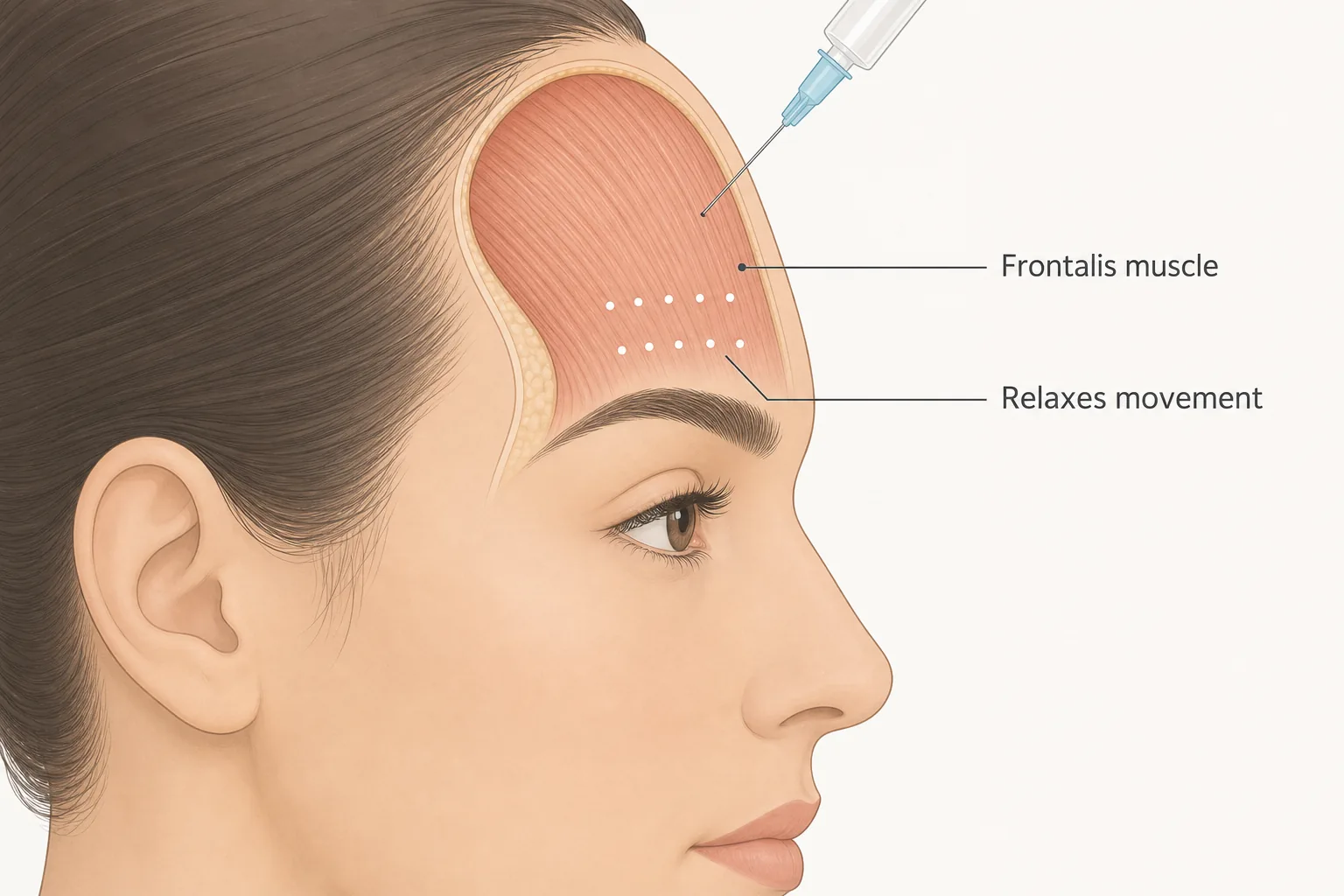
Botox is a wrinkle-reduction injectable that uses a purified botulinum toxin to relax the frontalis, the muscle that lifts your eyebrows. When that muscle is calmed, the dynamic lines it produces during expression soften. Botulinum toxin temporarily blocks the nerve signals reaching the treated muscle, which is why the effect fades as nerve function recovers.
Results appear quickly, usually within a few days, and they are predictable. That makes Botox a reliable first step for lines that only show when you raise your brows or frown. The trade-off is maintenance: because the muscle regains movement, treatment is repeated a few times a year to hold the result.
How the plasma pen works on forehead lines
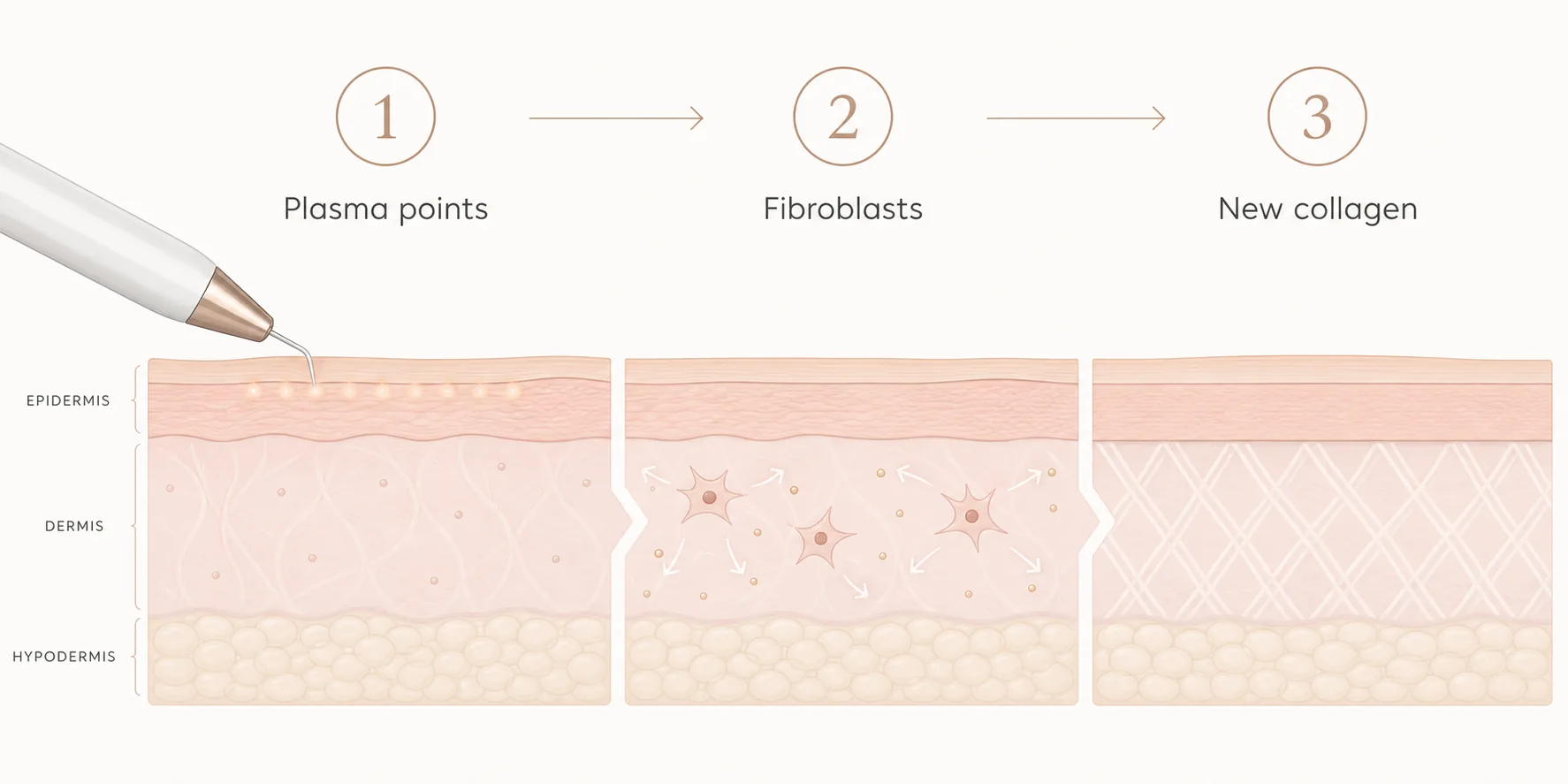
Fibroblast skin tightening and collagen stimulation
The plasma pen delivers tiny, controlled points of low-temperature plasma to the skin’s surface. Each point creates a micro-injury that triggers fibroblast activity, the process behind collagen production and skin tightening. Over the following weeks, the skin firms and etched lines soften. A peer-reviewed study of low-temperature plasma found it effective for reducing facial wrinkles, supporting its role as a collagen-stimulation treatment rather than a muscle relaxant.
That makes fibroblast treatment better suited to static lines, crepey texture and mild skin laxity, the concerns that stay visible even when your face is at rest. Two things are worth setting straight from the start. Results are gradual, not instant. And there is genuine downtime: the treated points form small carbon crusts that need time to heal, so this is not a lunch-hour procedure.
Plasma pen vs Botox: a side-by-side comparison
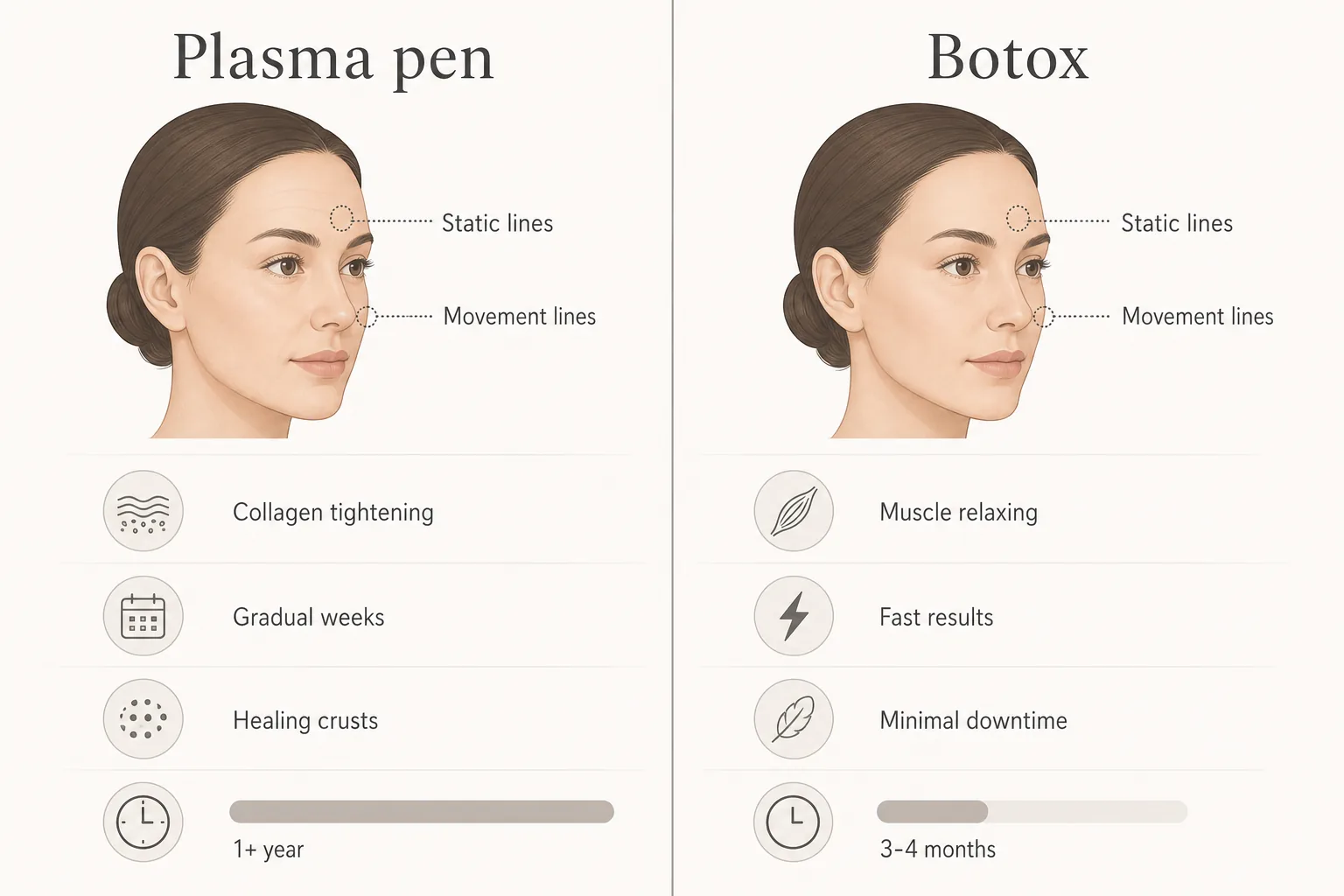
| Factor | Plasma pen (fibroblast) | Botox |
|---|---|---|
| How it works | Collagen remodelling and skin tightening | Relaxes the forehead muscle |
| Best for | Static lines, texture, mild laxity | Dynamic, movement lines |
| When results show | Gradually, over several weeks | Within a few days |
| How long it lasts | Often well over a year | Around 3–4 months |
| Downtime | Several days of healing and crusting | Minimal to none |
| Repeat needed? | Occasional top-ups as skin ages | Every few months to maintain |
Which treatment is right for your forehead lines?

Start by looking in the mirror with a relaxed face. If your forehead lines vanish when you stop moving your brows, they are dynamic, and Botox is usually the logical first step. If the lines stay etched in at rest, or the skin looks a little loose or crepey, the plasma pen’s collagen tightening tends to serve you better.
The two are not mutually exclusive. Many people carry a mix of dynamic and static lines, which is why a personalised assessment matters more than a blanket rule. At Guernsey Medi Spa, treatment plans are built around your skin and goals rather than a single fixed protocol, so the aim is natural-looking results rather than an obvious “treated” look.
Safety, suitability and what to expect
Both treatments should only be carried out by a trained practitioner after a proper consultation. Contraindications exist for each, including pregnancy and certain skin or medical conditions. For the plasma pen in particular, deeper skin tones carry a higher risk of post-treatment pigmentation changes, so suitability is assessed carefully beforehand and matched to your skin type.
Recovery differs. Botox usually involves little more than avoiding heavy exercise and lying flat for a few hours. The plasma pen needs diligent aftercare: keeping the area clean, letting the crusts fall away naturally, and protecting healing skin with sunscreen for several weeks. Realistic expectations and good aftercare are what turn a good treatment into a good result.
Frequently asked questions
What lasts longer than Botox for the forehead?
Can you combine plasma pen and Botox for forehead lines?
Does the plasma pen hurt more than Botox, and how does downtime compare?
How often will I need each treatment to keep results?
Is the plasma pen a permanent alternative to Botox?
Key takeaway
Longevity comes down to the type of line you are treating. Botox is the shorter-lasting but predictable choice for movement lines, while the plasma pen offers longer results for etched lines, texture and mild laxity, in exchange for healing time. A professional consultation is the surest way to match the treatment to your skin rather than to a single number of months.
