
After a facial, peel, laser session or microneedling, skin often feels warm, looks a little pink and turns more sensitive for a day or two. So how does LED light therapy help your skin after treatments during that recovery window? Specific wavelengths of light calm inflammation, support the skin’s repair process and encourage collagen, so redness settles faster and results hold better. It is a gentle, non-invasive finishing step: no needles, no downtime.
What LED Light Therapy Actually Is
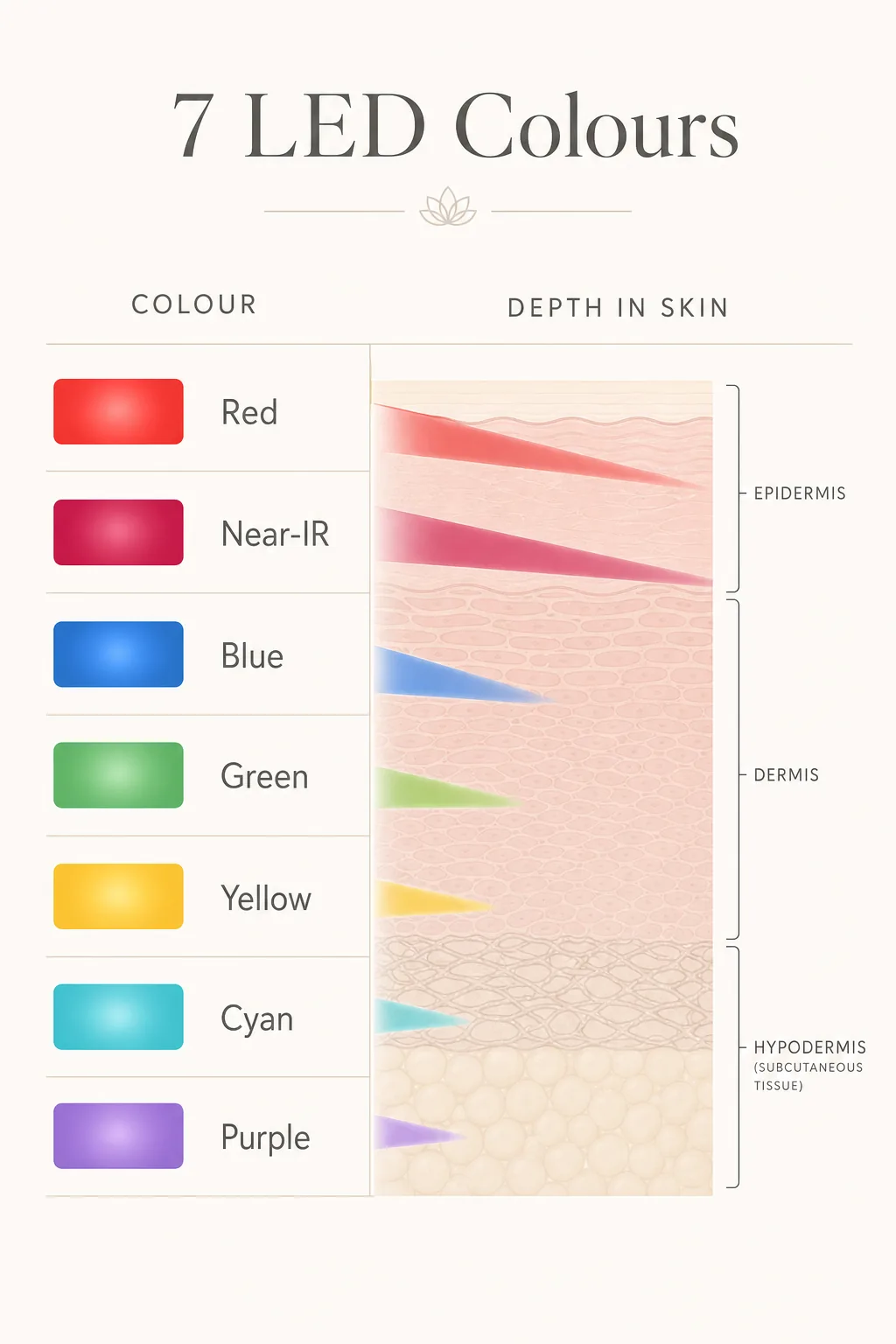
LED (light-emitting diode) phototherapy uses set wavelengths of visible and near-infrared light that skin cells absorb to trigger natural biological responses. There is no UV and no heat damage, so the light works at cell level without burning or breaking the surface. According to the Cleveland Clinic, red and near-infrared light are thought to act on the mitochondria in your cells, giving them more energy to repair and renew.
That makes it very different from laser. LED is low-intensity and non-ablative, it does not remove or wound tissue, which is exactly why it suits skin that has just been through a more active procedure.
The Role of Wavelength (the 7 Colour LED Light Therapy Chart)
Different colours travel to different depths and target different concerns. A simple 7 colour LED light therapy chart looks like this:
| Colour | Main target | Common use after treatment |
|---|---|---|
| Red | Collagen, general repair | Redness, ageing, overall recovery |
| Near-infrared | Deep tissue, circulation | Wound healing, deeper repair |
| Blue | Acne bacteria | Breakout-prone or congested skin |
| Green | Pigment, tone | Uneven tone, dark spots |
| Yellow | Surface redness | Sensitivity, flushing |
| Cyan | Calming | Inflamed, reactive skin |
| Purple | Combined red + blue | Blemishes plus rejuvenation |
Red and near-infrared are the colours most often chosen straight after a treatment. Their strengths, healing and collagen, match what recovering skin needs most.
How Does LED Light Therapy Help Your Skin After Treatments?
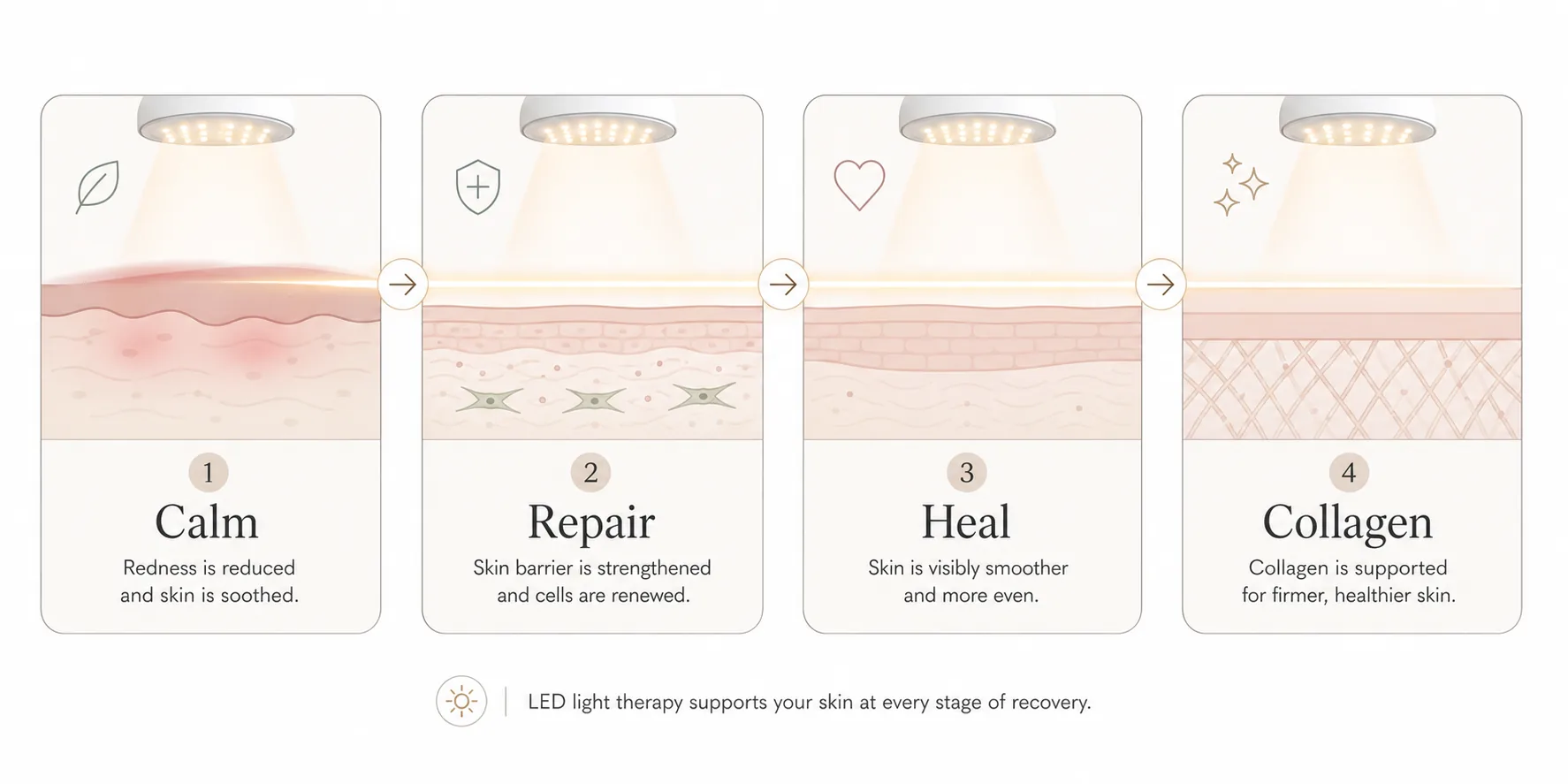
Once a treatment ends, skin moves through a short recovery phase: it settles inflammation, repairs its barrier, heals any micro-injury and locks in the benefit. LED supports each of these stages, which is why it is offered as an add-on to so many medical spa treatments.
Calming Redness and Inflammation
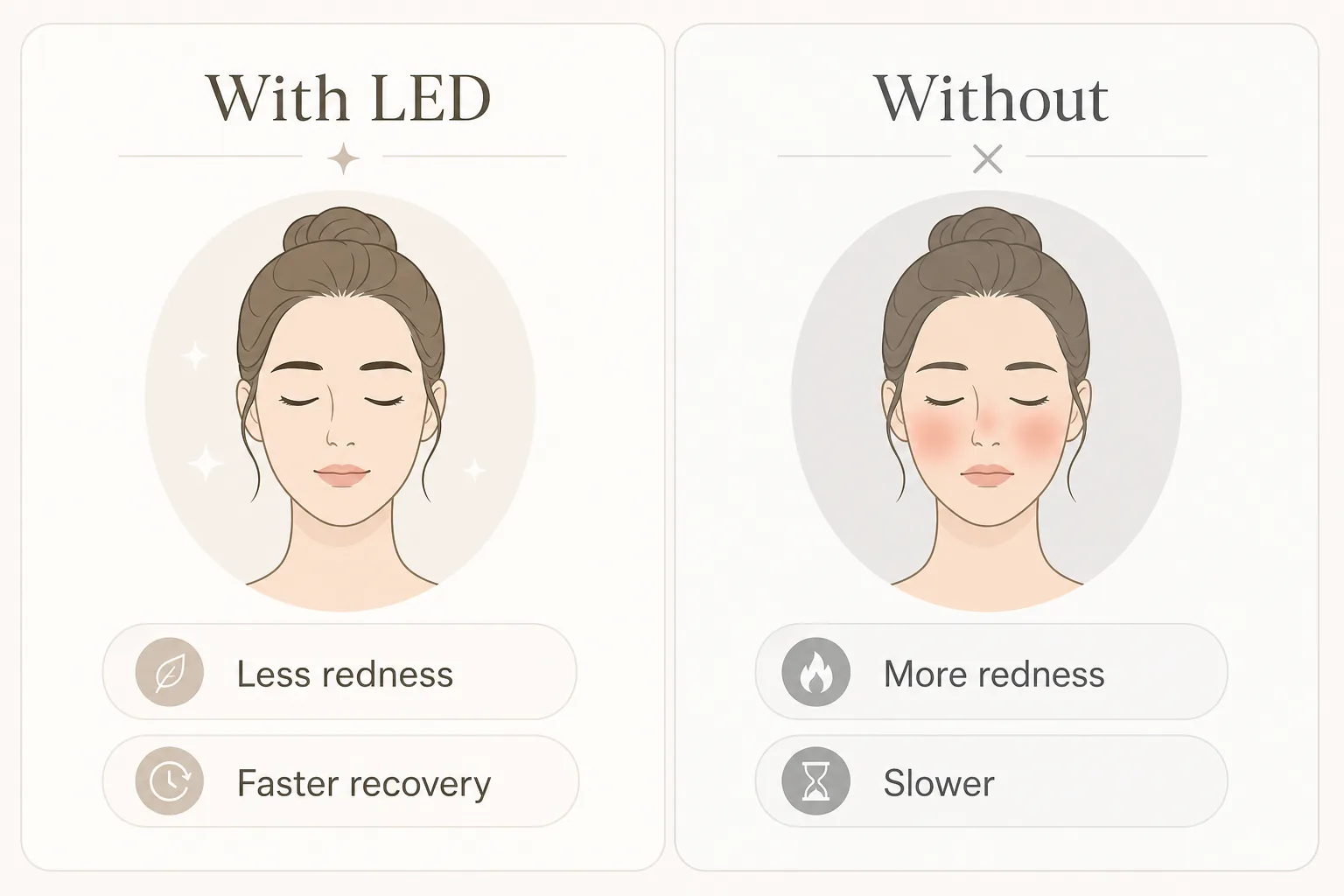
Red and near-infrared light have a documented anti-inflammatory effect, helping post-procedure flushing and swelling ease more quickly. A review in PMC describes how LED phototherapy reduces inflammation and supports tissue repair across a range of skin conditions. After an active facial or peel, that can mean a calmer, more comfortable look sooner.
Speeding Up Skin Healing and Recovery
LED also stimulates fibroblasts, the cells that produce new collagen and close wounds, which supports faster recovery after resurfacing or micro-injury treatments. A controlled trial published in PMC found that red and near-infrared light improved skin complexion and repair over a course of sessions. Used after laser or microneedling, that healing support can shorten the visible downtime those procedures often bring.
Boosting Collagen to Extend Your Results
Beyond healing, red light encourages collagen production, central to firmer, smoother skin. That makes LED a natural partner for collagen-stimulating treatments. As Stanford Medicine reports, red light therapy has growing evidence for improving skin quality and signs of ageing. By reinforcing collagen activity in the days after a treatment, LED helps the rejuvenation you have already paid for last longer.
Which Treatments Pair Well With LED Afterwards
LED works best as a supportive step inside a personalised treatment plan, not as a standalone fix. Here is where it commonly adds value:
| Treatment | Why LED helps afterwards |
|---|---|
| Advanced facials & glass skin facial | Calms surface redness, enhances that healthy, dewy Korean glass skin finish |
| Microneedling / collagen induction | Amplifies collagen response, speeds recovery from micro-channels |
| Laser & pigmentation treatments | Eases post-laser inflammation and supports skin repair |
| Injectables aftercare | Reduces minor swelling and soothes treated areas |
| Acne-focused treatments | Blue light targets bacteria while red calms irritation |
Because it is so gentle, LED slots into these routines without adding recovery time of its own.
What LED Light Therapy Won’t Do (Honest Expectations)
LED is genuinely useful, but it is not a cure-all, and any responsible clinic will tell you so. Harvard Health notes the evidence is promising yet still developing; as its review “LED lights: Are they a cure for your skin woes?” puts it, results can be real but are far from a guaranteed fix.
A few points to set expectations:
- It will not replace injectables, laser or surgery for deeper lines or volume loss.
- Results are cumulative, one session helps recovery, but visible skin-quality change builds over a course.
- It cannot undo poor aftercare, sun damage or skipped skincare.
Seen realistically, LED is a strong supporting act, not the headline treatment.
Is LED Safe on Freshly Treated Skin?
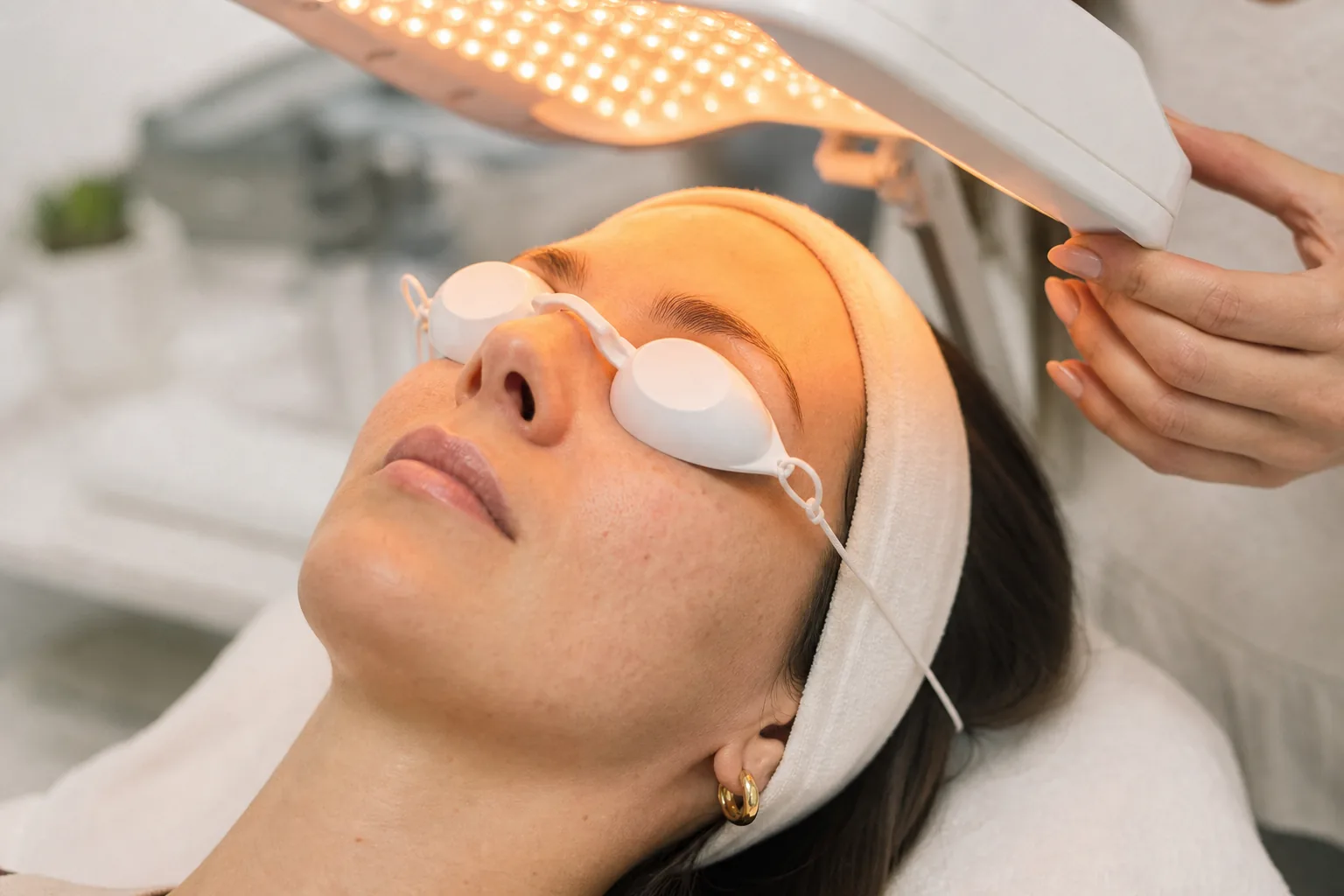
LED is considered very safe, including on skin that has just been treated. There are no needles, no cutting and no UV, so it does not compromise the barrier further. Sessions are short and painless, with most people feeling only gentle warmth. Protective eyewear is used, since bright light can be uncomfortable for the eyes.
As Baylor College of Medicine notes, LED light therapy has a strong short-term safety record when used correctly. A few people should still check with a practitioner first, those with photosensitivity disorders, or anyone taking medication that increases light sensitivity, such as certain antibiotics or isotretinoin. This is exactly why a proper skin consultation matters before LED is added to your aftercare.
What to Expect From LED as Part of Your Aftercare in a Clinic
In a clinical setting, LED is usually delivered by a professional panel positioned close to the skin, often as the calming final step of a session. In-clinic devices tend to be more powerful and consistent than small at-home masks, so the light reaches the skin at the intensity shown to make a difference, useful when the goal is genuine post-treatment recovery rather than a mild glow.
Within a medical-grade aesthetic skin clinic, LED is matched to your treatment, your skin type and your goals as part of a personalised plan. If you are considering treatments at a skin clinic in Guernsey, a consultation is the best way to understand where LED fits into your aftercare and how many sessions your skin is likely to benefit from.
Frequently asked questions
How soon after a treatment can you have LED light therapy?
How many LED sessions do you need to see results?
Does LED light therapy hurt or cause downtime?
What does the 7 colour LED chart mean, and which colour is best after treatment?
Can LED replace facials, injectables or laser?
Key Takeaway
LED light therapy is a gentle, evidence-supported finishing step that calms redness, speeds healing and encourages the collagen that keeps your results looking their best. It works hardest when it is matched to your skin and paired with the right treatment as part of a tailored plan, a supportive layer of care, not a one-off miracle.
