
Both arrive in a similar-looking syringe and sit in the same treatment room, which is exactly why patients get stuck. The short version of polynucleotide injections vs hyaluronic acid: hyaluronic acid adds water and structure now, while polynucleotides ask your own skin cells to rebuild quality over the following weeks. One replaces what is missing. The other repairs how the skin behaves.
Polynucleotide injections vs hyaluronic acid at a glance
| Polynucleotide injections | Hyaluronic acid injectables | |
|---|---|---|
| Main action | Stimulates repair and collagen production | Attracts and holds water; adds volume |
| What it targets | Skin quality, elasticity, texture, hydration from within | Volume loss, contour, lines, surface hydration |
| Results appear | Gradually, over several weeks | Immediately, settling over a week or two |
| Typical course | Short course of sessions, then maintenance | Single treatment, then top-ups |
| Result reads as | Healthier, firmer skin | Fuller, smoother skin |
| Best-suited areas | Under eyes, neck, mouth area, thin or crepey skin | Cheeks, temples, jawline, deeper folds |
The core difference is repair versus replace. Volume loss and defined lines respond to hyaluronic acid. Thin, crepey, dull or fragile skin responds better to a biostimulator.
How polynucleotide injections work in the skin
Polynucleotides used in aesthetic medicine are purified DNA fragments, most commonly derived from fish sources such as salmon or trout. They act as a biostimulator, not a filler.
Placed in the dermis, they support fibroblast activity and collagen stimulation, improve hydration from within, and gradually refine texture and elasticity. There is very little immediate volume, so the change builds across a course of sessions.
Typical uses: crepey under-eye skin, fine lines, thin or dull skin, post-acne texture, the neck, and the delicate area around the mouth. At Guernsey Medi Spa these sit within Dr Mayoni’s polynucleotide and injectable skin booster treatments, with particular experience in the eye and mouth areas, where technique matters most.
How hyaluronic acid injectables work in the skin
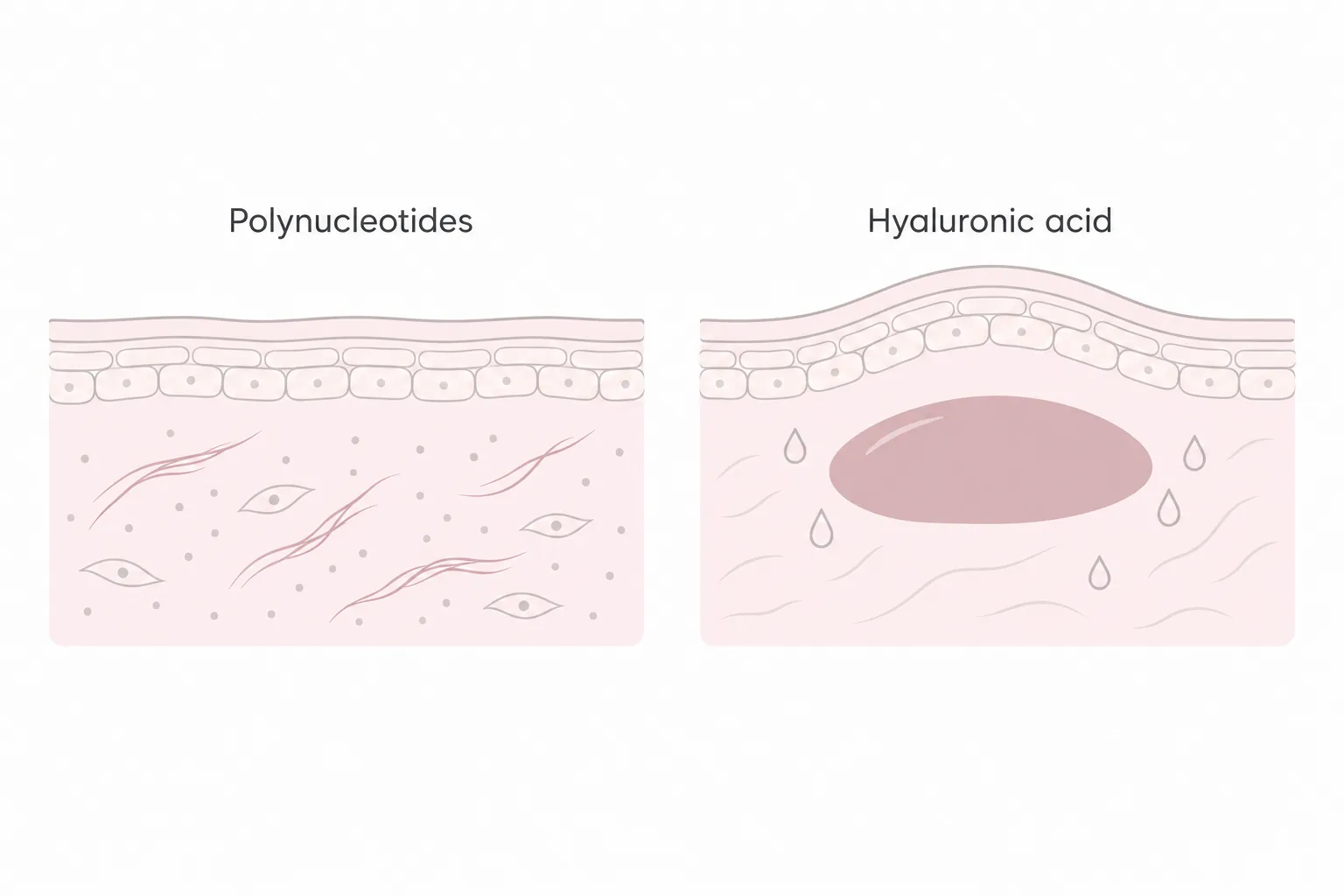
Two different products get called the same thing, and confusing them causes most of the disappointment.
- Cross-linked dermal fillers are firmer gels used for structure, volume and facial balancing.
- Hyaluronic acid skin boosters are softer, spread through the skin to hydrate rather than to shape.
Hyaluronic acid binds water, so it plumps, smooths and improves how light reflects off the surface, the finish people search for as glass skin. Results show on the day and settle over the following week or two.
Speed, longevity and side effects
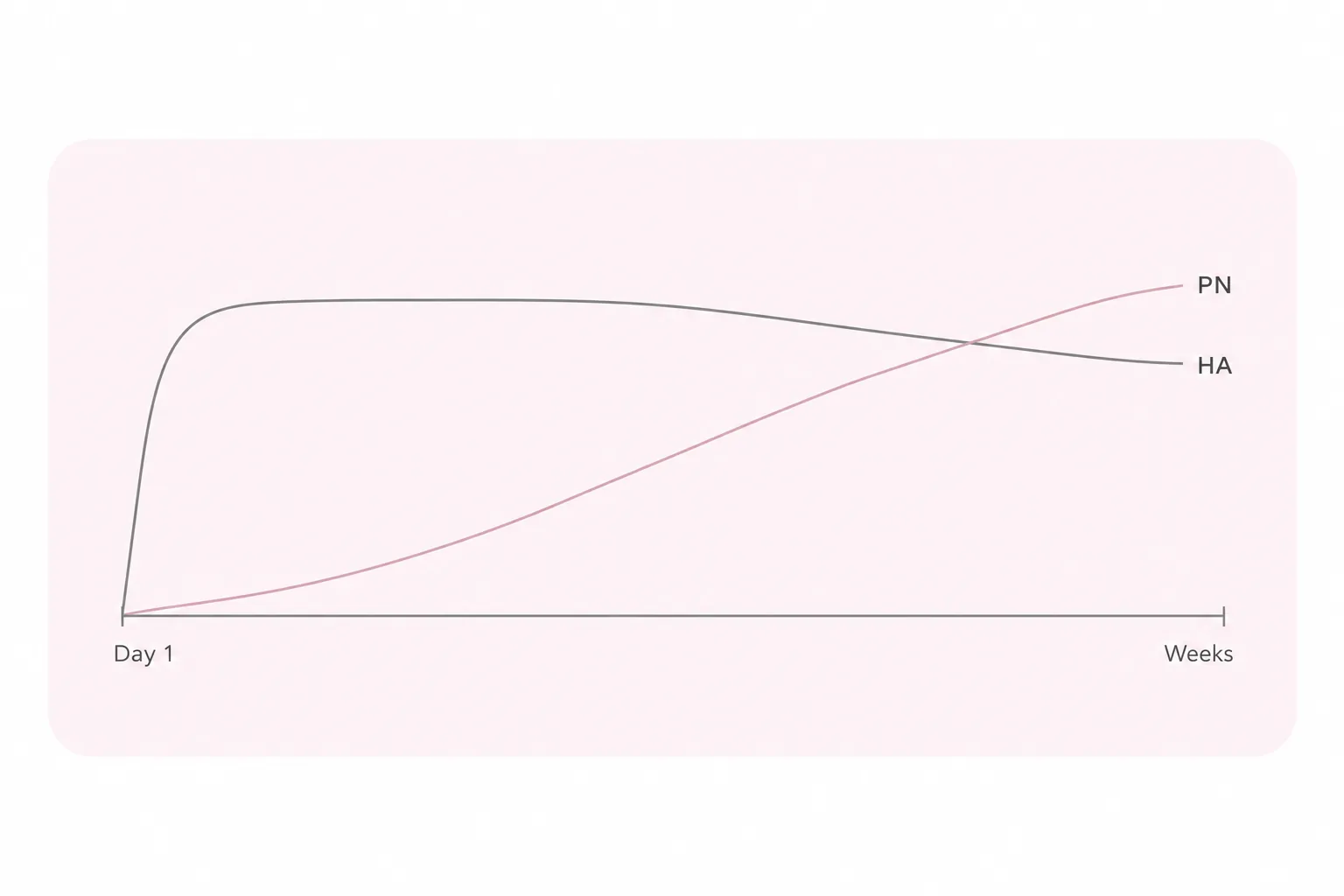
Polynucleotide injections vs hyaluronic acid: how fast, how long
Hyaluronic acid gives you the before-and-after on the day. Longevity depends on the product used, the area treated and your metabolism, so no honest clinic quotes one fixed figure.
Polynucleotides run the other way: little visible change early, then noticeable improvement in tone and texture weeks after the first session, with continued refinement as new collagen matures. In a randomised split-face trial of periocular rejuvenation, polynucleotides improved skin elasticity and texture more than hyaluronic acid filler.
When either treatment stops, skin drifts back toward its baseline. Neither is permanent, and both are usually maintained on a planned rhythm.
Side effects and safety differences
Both share ordinary injection-related effects: redness, mild swelling, pinpoint bruising and short-lived tenderness.
Hyaluronic acid carries product-specific risks, including lumps or unevenness if poorly placed, and rare vascular complications with cross-linked filler. It has one clear advantage: it can be dissolved with hyaluronidase. Polynucleotides can leave small temporary blebs at injection points and are broken down naturally by the body, so no dissolving agent is used.
Because polynucleotides are fish-derived, flag any fish allergy at consultation. Neither treatment is offered during pregnancy, breastfeeding, or over an active skin infection.
The biggest safety variable is not the product; it is the training and anatomical knowledge of the person injecting it.
Choosing by skin concern
| Concern | Better starting point |
|---|---|
| Hollow under eyes (true volume loss) | Hyaluronic acid, carefully placed |
| Crepey, thin under-eye or lid skin | Polynucleotides |
| Dehydrated, dull complexion | Hyaluronic acid skin booster |
| Rough texture, post-acne skin | Polynucleotides |
| Loss of cheek or jawline volume | Hyaluronic acid filler |
| Early laxity, poor skin resilience | Polynucleotides |
| Mature skin over 60 | Usually both, quality first |
Filler will not fix poor skin quality, and polynucleotides will not restore lost volume. A personalised treatment plan usually addresses skin health before structure, because good skin makes any structural work look more natural.
Using polynucleotides and hyaluronic acid together
The common sequence is a polynucleotide course to strengthen skin quality, then hyaluronic acid only where volume or contour is genuinely missing. Patients often need less filler than they expected once the skin itself improves.
Practitioners generally space these appointments rather than injecting both into the same area on the same day, which keeps swelling predictable and makes it clear which treatment produced which result. Medical-grade facials, a chemical peel suited to sensitive skin, and a professional skincare routine hold results between sessions. That assessment-led approach, at an aesthetic skin clinic in Guernsey, is what keeps results looking natural rather than treated.
Frequently asked questions
Are polynucleotides the same as skin boosters?
Which is better for crepey lids and tired-looking eyes?
Can polynucleotides be dissolved like hyaluronic acid filler?
Do polynucleotide injections work on mature skin?
How many sessions before I see something?
Key takeaway
Repair or replace. Polynucleotides rebuild skin quality slowly and hold it there with maintenance. Hyaluronic acid restores hydration and volume immediately.
Name the concern, set your timeframe, then match the injectable to both. A consultation with a medically trained practitioner confirms which one your skin actually needs, and whether the answer is one, the other, or both in order.
