
If you are researching what polynucleotide injections are and what they do for skin, the short answer is that they are injectable skin boosters which prompt your own cells to repair and rebuild, rather than adding volume or relaxing muscles. They sit in a separate category from dermal fillers and wrinkle-relaxing injectables, and they target skin quality: hydration, firmness, texture and repair.
What Are Polynucleotide Injections? A Plain-English Definition
Polynucleotide injections are biocompatible injectable gels made from purified, fragmented DNA chains, usually sourced from salmon or trout. The purification process is designed to remove protein material, leaving DNA fragments that human tissue tolerates well.
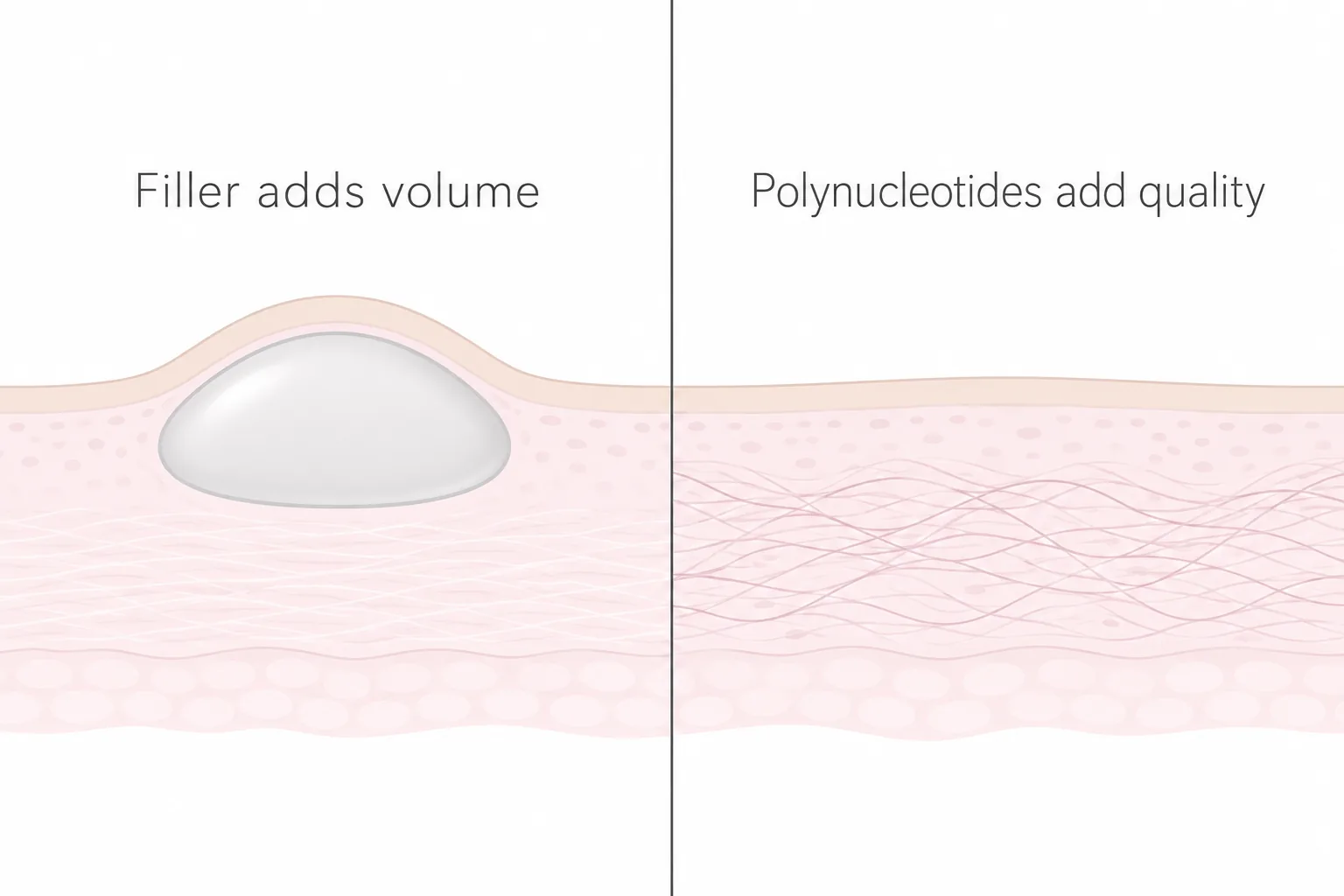
They are classed as biostimulators, not volumisers. Nothing is filled or lifted mechanically. Small deposits are placed into the superficial dermis with a fine needle or cannula and spread across the treatment area. Product choice is a clinical decision made at consultation, based on the area treated and the concern.
How Polynucleotide Injections Work Inside the Skin
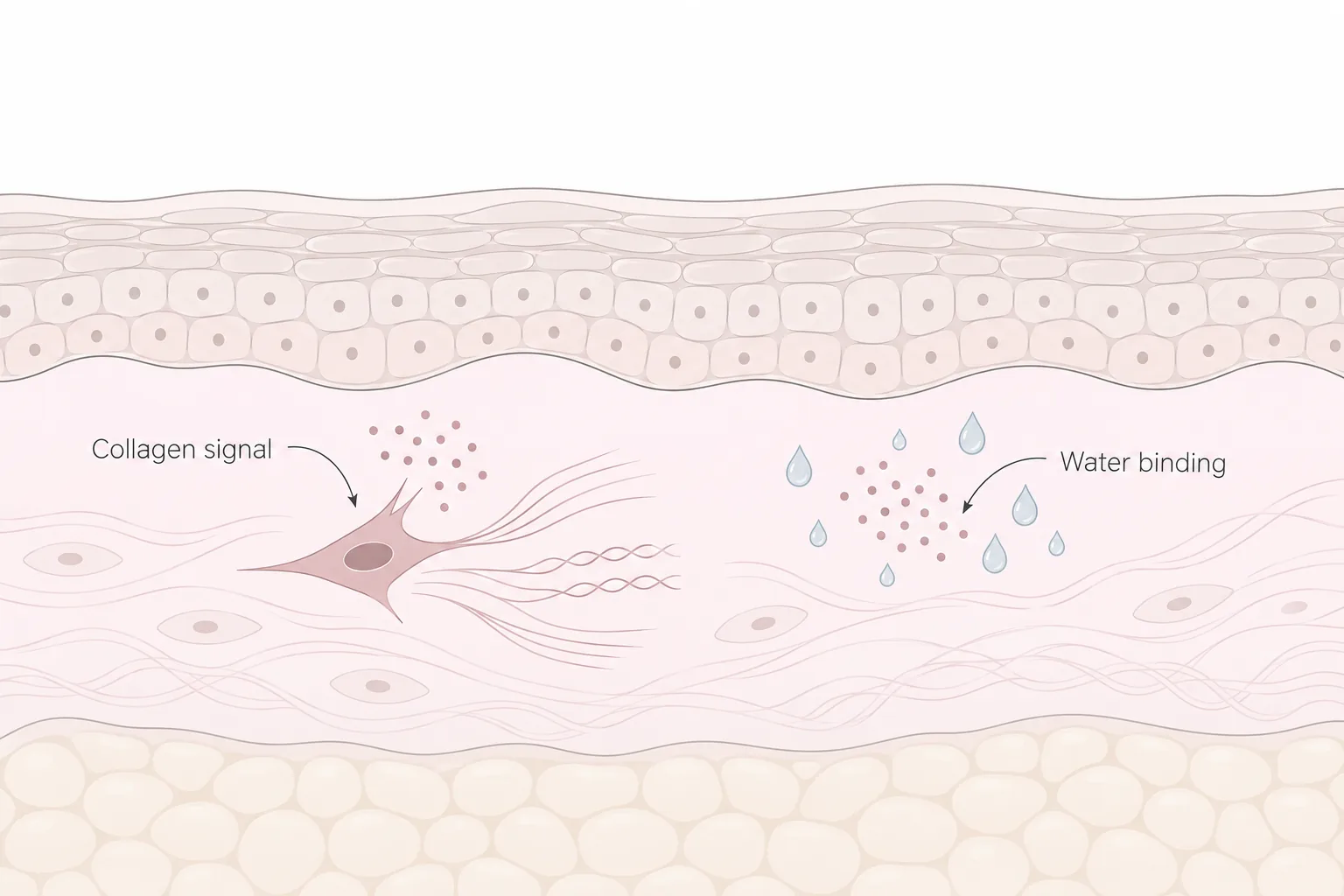
Once in the dermis, polynucleotides act as a signal to fibroblasts, the cells that manufacture collagen and elastin. Waking those cells is what drives the slow improvement in firmness and elasticity people notice across a course of treatment.
They also bind water within the dermis, which supports hydration and a plumper look without adding structural volume. Alongside that, they are used to support tissue repair and a calmer skin environment, which is why they often suit reactive or easily flushed skin.
Hyaluronic acid hydrates fairly quickly, while polynucleotides aim to change how the skin behaves over several weeks. That difference shapes the polynucleotide and skin booster treatments at our Guernsey aesthetic skin clinic, where the delicate eye and mouth areas are treated regularly.
What Polynucleotide Injections Do for Skin
| Skin concern | What the treatment targets | Realistic timeframe |
|---|---|---|
| Loss of firmness | Fibroblast activity, collagen and elastin | Gradual, across the full course |
| Dehydration and rough texture | Water binding in the dermis | Often the first change noticed |
| Fine lines and crepey skin | Skin thickness in thin-skinned areas | Several weeks after starting |
| Scarring and general repair | Tissue repair and cell turnover | Slow, course-dependent |
| Redness and reactivity | A calmer, less irritable skin environment | Progressive |
What Polynucleotide Injections Do for Skin Week by Week
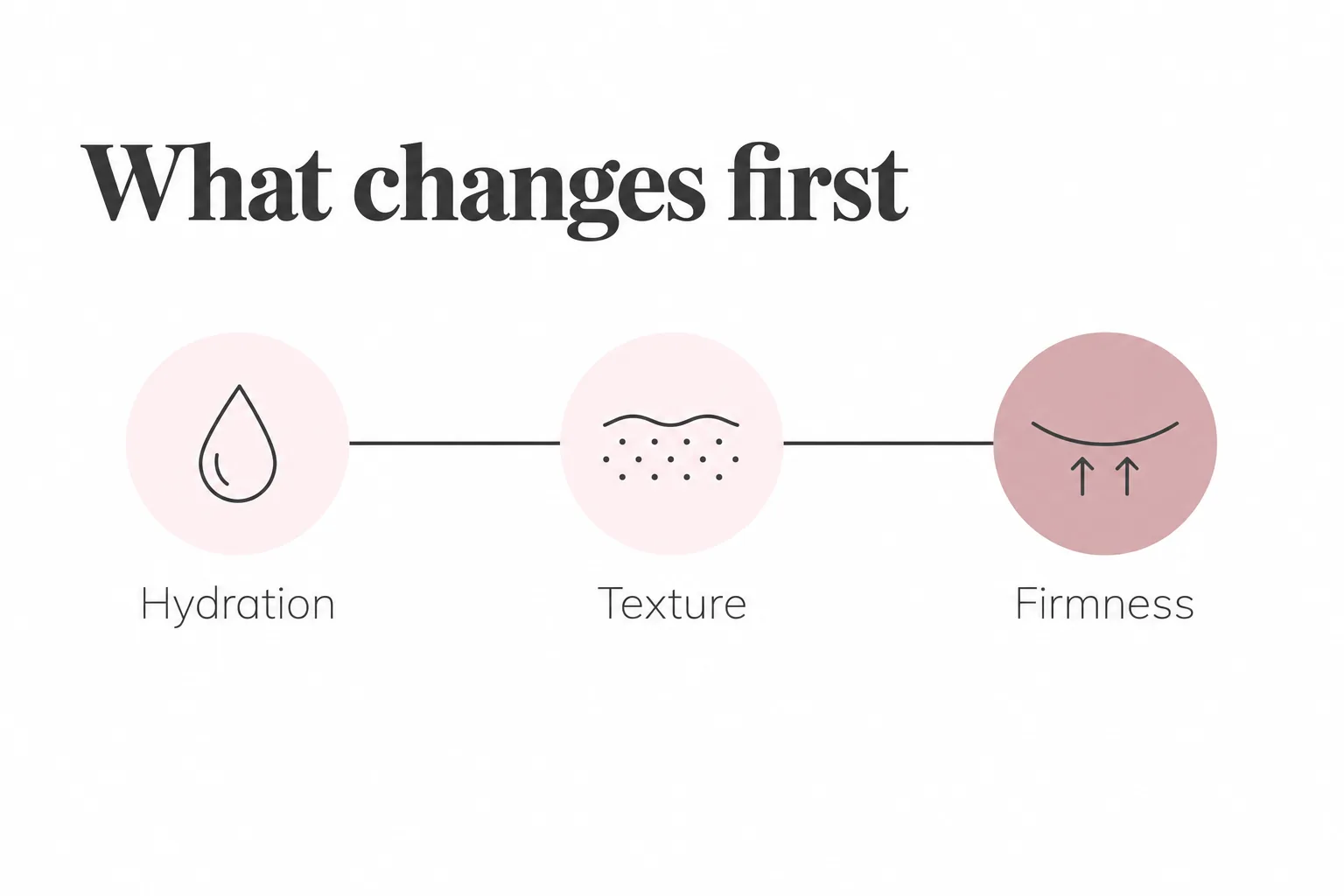
Expect nothing dramatic on day one. Most people see hydration and glow first, then texture, then firmness. Peak change usually arrives some weeks after the final session, once collagen remodelling has had time to happen.
Under-Eye Polynucleotides: The Area That Draws Most Questions
Under-eye skin is thin, mobile and unforgiving. Fillers placed here can cause puffiness or a bluish tinge if they sit too superficially, so plenty of patients are declined for tear trough filler and left without an option.
Because polynucleotides add no volume, they suit crepey texture, fine lines and the shadowing that comes from thin, poor-quality skin rather than from hollowing. The same reasoning applies around the mouth and on the neck. This is a high-skill area, and injector experience matters more than the product on the tray.
Polynucleotides vs Microneedling
| Polynucleotide injections | Microneedling | |
|---|---|---|
| Mechanism | Biochemical signal to skin cells | Controlled micro-injury that triggers healing |
| Delivery | Injected into the dermis | Needled across the skin surface |
| Best for | Thin, dehydrated, crepey, reactive skin | Texture, pores, broad surface rejuvenation |
| Reactive skin | Generally gentler | Can be more inflammatory |
Neither is objectively better. They pull different levers, and many personalised treatment plans use both in sequence rather than choosing one.
What a Treatment Course Involves
Treatment starts with a skin assessment and medical history, including allergy screening, since the material is fish-derived. Numbing cream is applied and the injection appointment itself is short.
Polynucleotides are given as a course, with sessions spaced a few weeks apart and maintenance afterwards. The number of sessions is set at consultation. Aftercare is simple: skip makeup, heat, saunas, strenuous exercise and active skincare for a short period. Small bumps, redness, mild swelling and occasional bruising are normal and settle.
Who Suits the Treatment, and Who Doesn’t
Good candidates have dehydrated, dull, thinning, crepey, reactive or early-ageing skin and want a change in skin quality rather than facial shape. Pregnancy, breastfeeding, fish allergy, active skin infection and certain autoimmune conditions are discussed at consultation and may rule the treatment out.
Results are gradual, so this is the wrong choice if you need visible change by the weekend. Polynucleotides will not correct deep static wrinkles, significant laxity or lost facial volume; they are not a substitute for volume replacement or wrinkle-relaxing injections, and results fade without maintenance.
Frequently asked questions
How much is a full face of polynucleotides?
How long do polynucleotide injection results last?
Are polynucleotides actually worth it?
Do they hurt, and is there downtime?
Can they be combined with other treatments?
Key Takeaway: A Skin Quality Treatment, Not a Quick Fix
Polynucleotide injections suit people who want their own skin to work better, not people chasing instant change.
The best outcomes follow an accurate assessment of what is actually causing your concern, and an injector who treats delicate areas regularly. A skin consultation is the sensible first step.
