
If you have been asking what chemical peel is best for dull tired looking skin, the short answer is a light or superficial peel, though the most suitable option depends on what is actually driving the dullness in the first place.
This article covers:
- Which chemical peel works best for dull, tired-looking skin
- How to choose based on skin type and sensitivity
- What results to realistically expect, and how long they take
- How much downtime is normal after a treatment
- When a peel may not be the right first step
What Chemical Peel Is Best for Dull Tired Looking Skin?
For most people, a light or superficial chemical peel is the most appropriate starting point. These peels work on the outermost layer of skin to clear the build-up of dead cells that mutes tone, creates rough texture, and reduces how well your skincare products actually absorb.
This is not just clinical preference. The superficial peel segment held the largest global market revenue share in 2024, attributed to its non-invasive nature, minimal downtime, and reliable outcomes across a range of skin concerns.
Best Chemical Peel for Glow and Freshness
For skin that looks flat rather than visibly damaged, a glycolic acid or lactic acid peel is typically the first recommendation. Glycolic acid has the smallest molecule of all AHAs, allowing it to penetrate the outer skin layer efficiently and stimulate cell renewal. To help maintain these results between treatments, the AHA Renewal Serum can be a valuable addition to your skincare routine.
Lactic acid offers a gentler route to a comparable result. It exfoliates, brightens, and hydrates simultaneously, making it well-suited for dullness that overlaps with dryness.
If you are also comparing non-invasive brightening options, this guide on what is a korean glass skin facial and is it worth it covers another professional hydration-based treatment worth reviewing alongside peels.
Best Chemical Peel for Texture and Uneven Tone
When dullness comes with rough texture, congested pores, or mild post-breakout marks, a salicylic acid-based peel tends to be the stronger fit. Salicylic acid is oil-soluble, so it works inside the follicle rather than just across the surface.
| Peel Strength | Best For | Downtime | Who It Suits Most |
| Superficial AHA or BHA | Dullness, rough texture, flat tone | 1 to 3 days | Most skin types, first-time users |
| Medium (TCA, Jessner’s) | Pigmentation, early fine lines, sun damage | 5 to 7 days | Experienced peel users with tolerant skin |
| Deep (Phenol-based) | Significant wrinkles, deep scarring | 10 to 14 days | Specific clinical cases under medical supervision |
Why Skin Looks Dull, Flat, or Tired in the First Place
Dullness rarely has a single cause. Before choosing a peel, it helps to identify what is actually behind the flat appearance.
Is It Dullness, Dryness, Pigmentation, or Sun Damage?
Most clients present with a combination of two or three overlapping concerns.
| Symptom | Likely Cause |
| Skin looks lifeless and flat | Slow cell turnover, dead cell build-up |
| Rough texture | Surface congestion, skin debris |
| Uneven patches or discolouration | Mild pigmentation, early sun exposure |
| Tired-looking despite hydrating | Dehydration in the deeper skin layers |
| Fine lines appear more visible | Early collagen reduction |
Identifying the root cause matters because a peel suited to general dullness may not address mild pigmentation with the same efficiency, and a medium-depth peel may be unnecessary for someone whose primary concern is dehydration-led flatness.
Which Type of Chemical Peel Is Best for Different Skin Concerns?
The best approach is to match the peel to the specific concern rather than defaulting to the strongest available option.
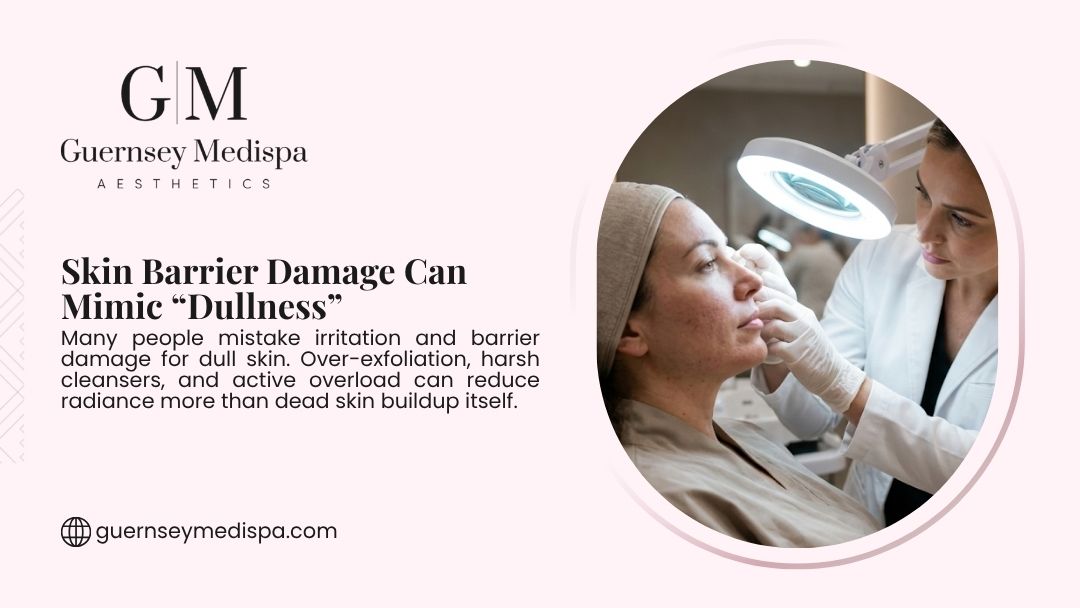
Alpha-hydroxy acids such as glycolic and lactic acid are peer-reviewed to enhance skin rejuvenation by boosting collagen and elastin synthesis and improving both skin texture and luminosity.
These are the clinical workhorses for general glow and texture improvement.
Beta-hydroxy acids, primarily salicylic acid, are better suited to oiliness-driven concerns. They penetrate deeper into the follicle, making them more appropriate when dullness and congestion go hand in hand.
| Concern | Recommended Peel | Key Ingredient |
| Glow and general freshness | Superficial | Glycolic acid, lactic acid |
| Rough texture | Superficial to light medium | Salicylic acid, mandelic acid |
| Mild pigmentation | Light medium | Glycolic acid, Jessner’s solution |
| Early fine lines | Medium | Low-concentration TCA |
| Dullness with dehydration | Superficial | Lactic acid |
How to Choose the Right Peel for Your Skin Type and Sensitivity
The best peel is not always the strongest peel. Skin sensitivity, skin tone, and your current skin condition all shape which option will deliver the safest and most effective result.
Chemical Peels for Sensitive Skin
Sensitive skin generally responds best to lower acid concentrations with longer intervals between sessions. Lactic acid is the most widely recommended starting point because it exfoliates while simultaneously hydrating, which reduces the risk of barrier disruption.
If you are unsure whether professional exfoliation is appropriate for your skin right now, this article on whether you can get a chemical peel if you have sensitive skin covers the key clinical considerations in detail.
Can Deeper Peels Work Better for Dull Skin?
Stronger does not mean more effective for this particular goal. Post-inflammatory hyperpigmentation (PIH) is significantly more common in individuals with Fitzpatrick skin types III through VI, and the risk increases considerably with deeper peel formulations.
For someone whose primary goal is a brighter, fresher appearance with manageable recovery, a light peel performed in a series is the more appropriate clinical route.
| Skin Type | Recommended Starting Point |
| Sensitive | Low-concentration lactic acid |
| Normal | Glycolic acid, light to medium strength |
| Acne-prone | Salicylic acid peel |
| Darker skin tones (Fitzpatrick III to VI) | Mandelic acid or lactic acid, lower concentration |
| First-time peel users | Superficial AHA, patch-tested first |
What Results Should You Expect, and How Long Do They Take?
How Many Chemical Peels Do You Need for a Visible Glow?
One session can produce a noticeable improvement. Most clients report visible brightness and smoother texture within a few days of their first treatment. For more consistent, longer-lasting improvement, a series is the clinical standard.
According to the Journal of Clinical and Aesthetic Dermatology, a series of glycolic acid peels can reduce pigmentation by 35 to 60 percent over six sessions, with results building cumulatively.
For general dullness and texture, most protocols recommend sessions every four to six weeks.
How Long Do Results Usually Last?
Results from a light peel are not permanent. Skin continues to produce dead cells and respond to environmental exposure, which means maintenance is part of the plan.
| Stage | What to Expect |
| After one session | Brighter tone, smoother texture within a few days |
| After a series of 3 to 6 sessions | More consistent improvement in tone, texture, and radiance |
| Maintenance phase | Results sustained with sessions every 1 to 3 months |
| Longevity factors | Sun protection, home routine, skin type, lifestyle habits |
A 2024 expert consensus published in the International Journal of Dermatology and Venereology confirmed that glycolic acid’s effects are both concentration-dependent and cumulative, with periodic maintenance being the key factor in sustaining visible outcomes.
Downtime, Aftercare, and What to Avoid After a Chemical Peel
What Is Normal After a Peel?
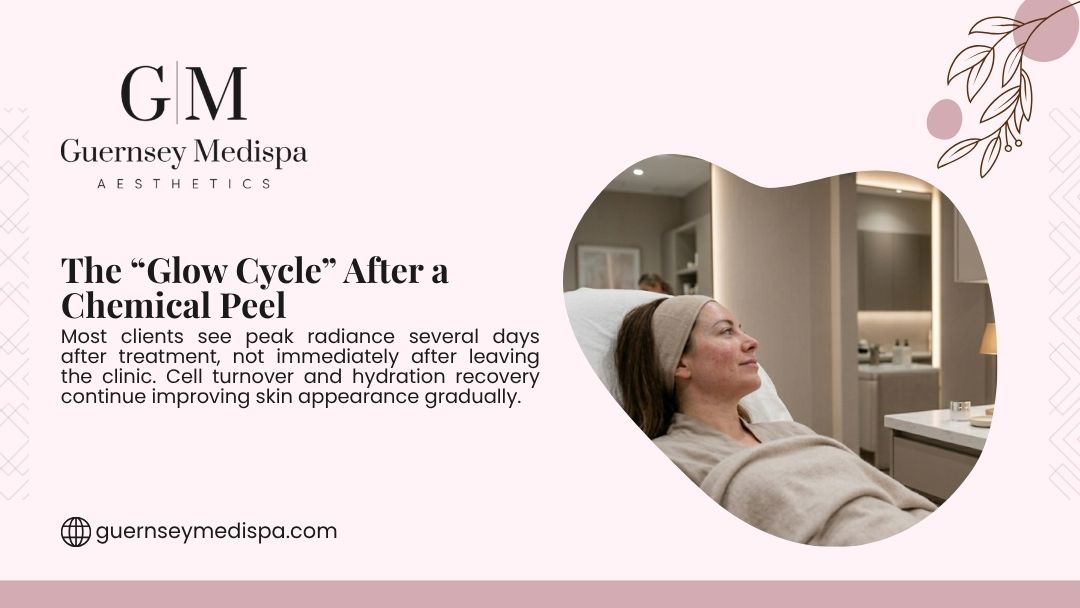
The word “peel” creates more concern than the experience usually warrants. For light and superficial treatments, the recovery response is typically mild and predictable.
Common post-treatment responses include:
- Mild redness or warmth for a few hours after the session
- Light dryness or tightness over the following one to two days
- Subtle flaking or shedding between days two and five
These are signs the treatment is working, not signs that something has gone wrong.
| Timeframe | What to Do |
| First 24 hours | Gentle cleanser only, broad-spectrum SPF, avoid heat and steam |
| Days 1 to 7 | Moisturise consistently, avoid actives and exfoliants |
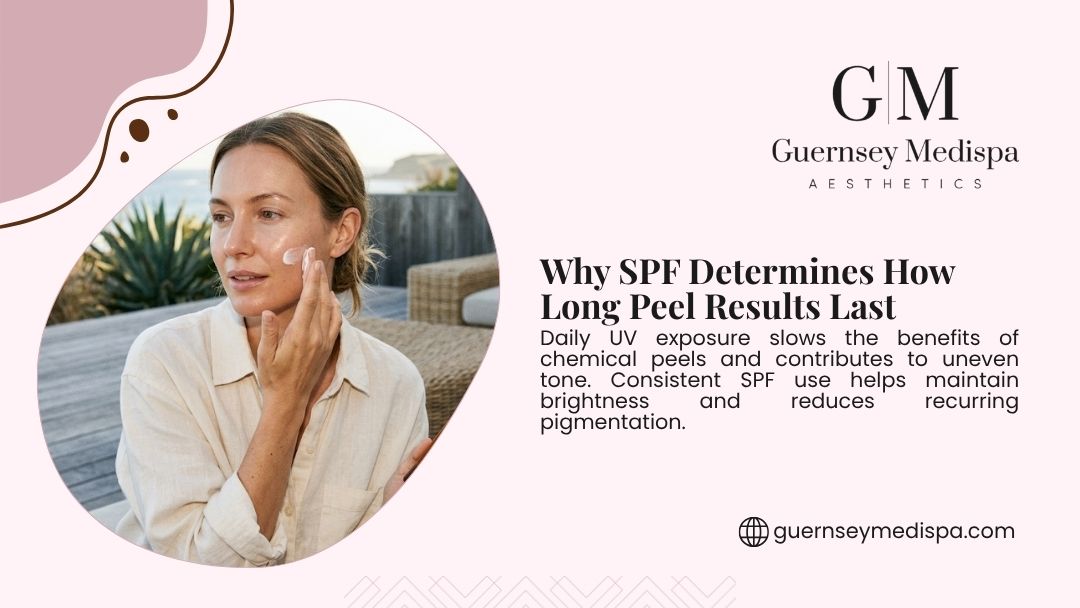
| What to avoid | Direct sun, retinoids, AHAs or BHAs, picking at skin |
| Contact your provider if | Excessive redness, swelling, or discomfort that does not settle |
When a Chemical Peel Might Not Be the Best First Option
A peel is effective for many causes of dullness, but it is not always the first or only answer.
If dullness is primarily caused by deep dehydration or a compromised skin barrier, a hydration-focused treatment or barrier repair protocol may be the more appropriate entry point.
For concerns that go beyond surface texture, such as structural laxity or significant collagen loss, understanding what rf microneedling does differently than regular microneedling may be relevant, as energy-based treatments reach dermal layers that a chemical peel cannot.
| Option | Best For | Key Consideration |
| Light chemical peel | Dullness, texture, mild tone concerns | Most effective as part of a series |
| Professional hydrating facial | Dehydration-led dullness | Focuses on barrier, less exfoliating |
| Brightening skincare routine | Maintenance and mild prevention | Gradual results, no clinical depth |
| Laser or energy-based treatment | Significant sun damage, structural concerns | More downtime, requires clinical assessment |
| Consultation first | Uncertain root cause | Always the safest and most targeted starting point |
Frequently Asked Questions
What chemical peel is best for dull tired looking skin?
For most people, a light or superficial AHA peel using glycolic acid or lactic acid is the most suitable option. It improves brightness, texture, and tone with minimal downtime and works across a wide range of skin types.
Is a light peel enough for dull skin?
For general dullness without deeper concerns such as significant pigmentation or scarring, a light peel is usually sufficient when performed as a series. Results are cumulative and built with each session.
How many chemical peels do I need to see a glow?
Most clients notice a visible improvement within a few days of their first treatment. For consistent, longer-lasting results, a series of four to six sessions spaced four to six weeks apart is the standard clinical approach.
Are chemical peels safe for sensitive skin?
Yes, when the right formulation and concentration are selected. Lower-strength lactic acid peels are the most commonly tolerated option for sensitive skin. A professional skin assessment before treatment is always recommended.
Can darker skin tones get chemical peels?
Yes, though peel selection is especially important. Research confirms that post-inflammatory hyperpigmentation is more common in Fitzpatrick skin types III through VI, which means gentler options such as mandelic or lactic acid peels are typically recommended.
Book a Skin Consultation at Guernsey Medi Spa
At Guernsey Medi Spa, every chemical peel begins with a thorough skin assessment. Our practitioners evaluate your skin type, tone, current concerns, and treatment goals before making any recommendation.
With over 15 years of experience in medical aesthetics and more than 10,000 treatments delivered, our approach is grounded in clinical precision and realistic outcomes.
We do not offer one-size-fits-all protocols. Every treatment plan is built around the individual in front of us.
Book a consultation today and find out which chemical peel is the right step for your skin.
