
Sensitive skin does not mean peels are off limits. But it does mean the wrong peel, at the wrong time, can leave skin red, reactive, and worse than when you started. Daily sun protection matters even more after a peel, so it is worth checking whether your SPF is doing enough before you book.
A meta-analysis published in the Journal of the European Academy of Dermatology and Venereology found that 71% of adults globally report some degree of sensitive skin.
The goal of any chemical peel with sensitive skin is visible improvement without triggering a reaction, and that outcome is achievable with the right approach. Our approach to regenerative skincare and treatments starts with assessing your skin barrier before any peel is recommended.
This article covers whether a peel is suitable for your skin, which options cause the least irritation, what to expect during recovery, and when it is smarter to wait.
Can You Get a Chemical Peel If You Have Sensitive Skin?
Yes, you can get a chemical peel if you have sensitive skin.
Sensitive skin is not one fixed condition. It can describe reactive skin that flushes easily, a weakened barrier from over-exfoliation, skin that stings with certain products, or a tendency toward rosacea. Each of these responds differently to treatment.
What matters is not just your skin type, but whether your skin is stable enough right now to tolerate a peel. A thorough consultation before any chemical peel with sensitive skin is the most reliable place to start.
Clients whose primary interest is a chemical peel for dull tired looking skin will find the selection process looks quite different from a sensitivity-focused approach.
| Skin Condition | Risk Level | General Guidance |
| Mildly reactive, currently stable | Low to moderate | Light peel often appropriate |
| Rosacea in remission | Moderate | Gentle formulation, professional assessment only |
| Active rosacea or eczema | High | Pause until inflammation settles |
| Barrier damage from over-exfoliation | High | Repair barrier first, then reassess |
| Dry, dehydrated but stable | Low to moderate | Lactic acid or PHA peel often suitable |
When Can You Get a Chemical Peel If You Have Sensitive Skin?
You are generally a suitable candidate if your skin is calm and not currently inflamed, you have no active flare of rosacea or eczema, you are not mid-course on strong retinoids, and you are prepared to follow pre- and post-care guidance carefully.
If your skin stings from ordinary products or is in the middle of a reaction, a peel is not the right next step yet.
What Makes Sensitive Skin More Reactive During a Peel?
If your skin reacts to everyday products, it helps to understand why before choosing a treatment.
An international survey published in the Journal of the American Academy of Dermatology (2024), covering 10,566 respondents across seven countries, found that sensitive skin syndrome is most frequently reported on the face, affecting 44% of participants.
Around 60% of those with sensitive skin also had a concurrent dermatological condition. That overlap matters when selecting a chemical peel with sensitive skin.
Sensitive Skin vs Damaged Skin Barrier
These two are often confused, and the distinction changes what your skin actually needs before treatment.
Sensitive skin is usually a long-term trait. A damaged barrier is often temporary, caused by over-exfoliation, harsh products, or environmental stress.
A 2026 clinical review confirmed that dry skin affects over 53% of adults globally, frequently linked to increased transepidermal water loss and reduced stratum corneum integrity.
| Condition | Common Signs | Impact on Peel Readiness |
| Sensitive skin type | Ongoing reactivity, flushing, tightness | Lower-strength peel, careful prep needed |
| Damaged skin barrier | Recent stinging, raw patches, peeling | Barrier repair comes first |
When Skin Is Too Inflamed to Treat Yet
Applying a chemical peel with sensitive skin during active inflammation is a real clinical risk. S2k clinical guidelines for rosacea state that chemical peels should be avoided during active flares, as additional irritation can deepen the inflammatory response and extend recovery significantly. Once the skin has fully recovered and inflammation is under control, professional treatments such as the 5X Power Peel may be considered following a clinical assessment.
If your skin is visibly irritated or reactive, it needs to return to a stable baseline before any peel is considered.
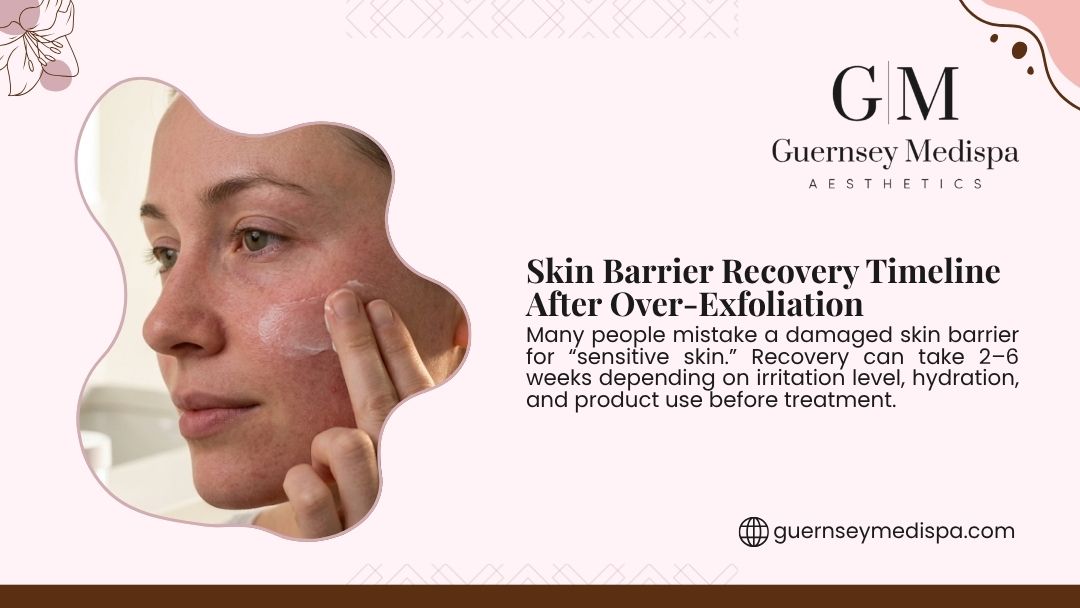
Which Chemical Peel Options Are Usually Gentlest for Sensitive Skin?
The formulation, acid type, concentration, and application time all influence how a chemical peel with sensitive skin performs and how well the skin tolerates it.
Light Peels, Medium Peels, and Deep Peels
| Peel Depth | Typical Sensation | Downtime | Suitability for Sensitive Skin |
| Superficial (lactic acid, PHA, mandelic) | Mild tingling or warmth | 1 to 3 days | Most appropriate starting point |
| Medium (TCA, Jessner’s) | Noticeable stinging | 5 to 7 days | Suitable only with stable, assessed skin |
| Deep (Phenol-based) | Significant discomfort | 10 to 14 days | Rarely appropriate as a first treatment |
A 2024 paper in Clinical, Cosmetic and Investigational Dermatology confirmed that lactic acid is mild, safe, and supports wound healing, making it one of the most recommended starting points for a chemical peel with sensitive skin.
Research also shows that polyhydroxy acid (PHA) formulations cause significantly less stinging and burning than standard AHAs, with better tolerance reported at both six and twelve weeks of use.
What “Gentle” Really Means in Practice
Choosing the right strength and formulation for a chemical peel with sensitive skin matters far more than simply picking the mildest acid by name. Application time, concentration, and skin preparation all affect how the skin responds.
A clinical study on PHA-based peels found that participants with sensitive skin saw a significant decrease in skin roughness and an improvement in firmness and elasticity after two months of treatment.
Mandelic acid also showed around 24% improvement in skin hydration at eight weeks. These are meaningful results from formulations designed specifically for reactive skin.
For clients interested in a hydration-focused alternative to exfoliation, a korean glass skin facial works through layered moisture and barrier support rather than acid-based exfoliation.
What to Expect Before, During, and After a Peel
How to Prepare If You Have Sensitive Skin
Good preparation reduces risk and improves the outcome. Before a chemical peel with sensitive skin:
- Stop retinoids at least one to two weeks before treatment
- Avoid additional exfoliants in the days leading up to your appointment
- Share all products, medications, and skin history with your provider
- Follow your clinic’s pre-care instructions closely and without improvising
- Allow your skin to fully settle if it has been recently reactive
What Is Normal After the Peel
A 2024 expert consensus in the International Journal of Dermatology and Venereology provides clear guidance on what follows a superficial peel. During the first three days, mild tingling, redness, or itching is normal and manageable with cold compresses.
From days three to seven, light flaking may appear. Patients are advised to moisturise consistently, avoid picking, and use SPF throughout recovery.
| Timeframe | Expected Response | Recommended Action |
| First 24 hours | Mild redness, warmth, tightness | Gentle cleanser, SPF, avoid heat and steam |
| Days 1 to 3 | Tingling, light sensitivity | Cold compress if needed, no active ingredients |
| Days 3 to 7 | Light flaking or dryness | Consistent moisturiser, do not pick |
| Contact provider if | Persistent swelling, severe redness, discharge | Seek clinical advice promptly |
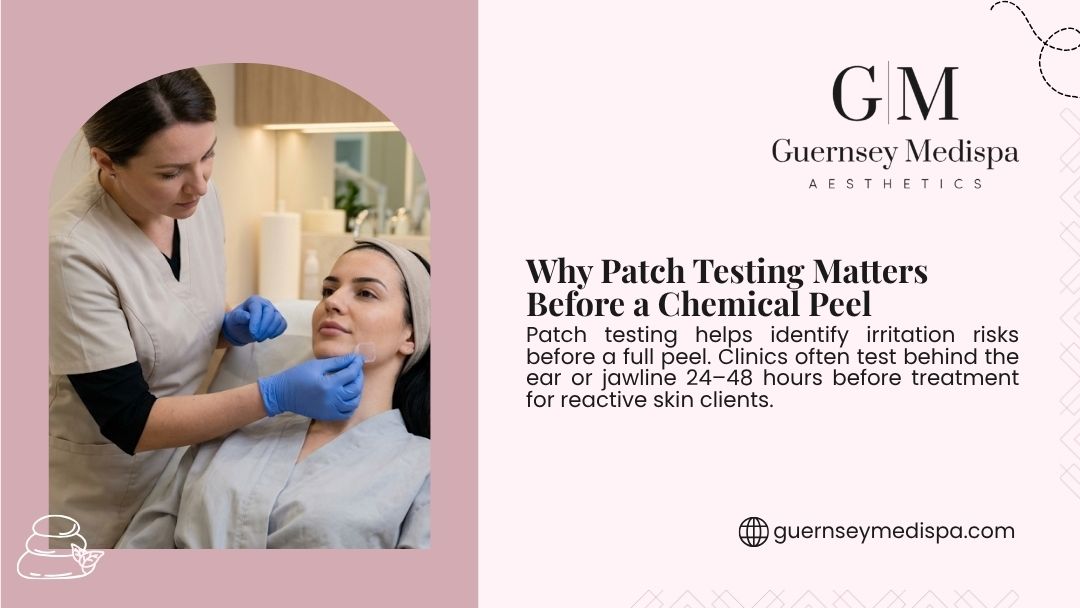
When You Should Avoid a Peel or Speak to a Professional First
A chemical peel with sensitive skin is appropriate for many people, but not in every situation. Knowing when to pause is just as important as knowing when to proceed.
Signs You Should Wait Before Booking
Hold off and speak to a professional if any of the following apply:
- Skin is currently inflamed, broken, or actively irritated
- You are in an active rosacea or eczema episode
- You have used isotretinoin in the past six months
- You have a history of poor wound healing or keloid scarring
- You have experienced a recent sunburn or chemical reaction on the face
NCBI StatPearls confirms that identifying risk factors and conducting a comprehensive patient assessment before any peel is clinically essential, and that treatment should only be evaluated by an experienced healthcare professional.
Questions to Ask in a Consultation
A good consultation should leave you better informed than when you arrived. Questions worth raising include:
- Which peel formulation fits my skin type and current condition?
- What level of redness or sensitivity should I realistically expect?
- How long does recovery typically take for someone with my skin?
- Are there any medications or products that could affect the outcome?
- Do you recommend a patch test before proceeding?
For clients managing post-acne marks or deeper textural concerns alongside sensitivity, microneedling for acne scars on cheeks may be worth discussing as a complementary option at the consultation stage.
Frequently Asked Questions
Can you get a chemical peel if you have sensitive skin?
Yes, in most cases you can get a chemical peel if you have sensitive skin. A light peel using lactic acid, mandelic acid, or a PHA formulation is often suitable for reactive skin. A proper skin assessment beforehand confirms the right formulation and timing.
What is the gentlest chemical peel for sensitive skin?
Lactic acid and PHA-based peels are the most widely recommended for reactive skin. Research confirms that PHAs are compatible with clinically sensitive skin, including rosacea and atopic dermatitis, while producing meaningful improvements in texture and hydration.
Will a chemical peel burn if I have sensitive skin?
Mild tingling or warmth during the treatment is normal. Significant burning is not expected with a correctly selected formulation. If strong burning occurs, tell your provider immediately.
Is redness after a chemical peel normal?
Yes, redness is a chemical peel normal. Mild redness in the first 24 to 72 hours is a typical recovery response. This differs from post-inflammatory hyperpigmentation, which develops later and does not resolve within a few days.
Should I avoid chemical peels if I have rosacea?
During an active rosacea flare, it is usually best to avoid chemical peels because inflamed skin can react more severely. If your rosacea is stable, some gentle peels may still be suitable under professional guidance, depending on your skin condition and sensitivity level.
Book a Skin Consultation at Guernsey Medi Spa
Managing a chemical peel with sensitive skin starts with the right assessment, not a generic protocol.
At Guernsey Medi Spa, every consultation evaluates your skin type, current condition, sensitivities, and treatment goals before any recommendation is made.
With over 15 years of experience in medical aesthetics and more than 10,000 treatments delivered, our practitioners are trained to identify what your skin is ready for right now, and equally, what it is not ready for yet.
Book a consultation today and get a clear, honest plan built entirely around your skin.
