
The Short Answer: Does Anything Work for Cellulite?
Does anything work for cellulite? Yes, but not in the way most adverts promise. No treatment removes cellulite permanently. Several options can reduce how it looks, and the right one depends on what is causing your dimpling.
Your results depend on four things: how severe the cellulite is, how firm your skin is, which body area you want to treat, and what you expect to see.
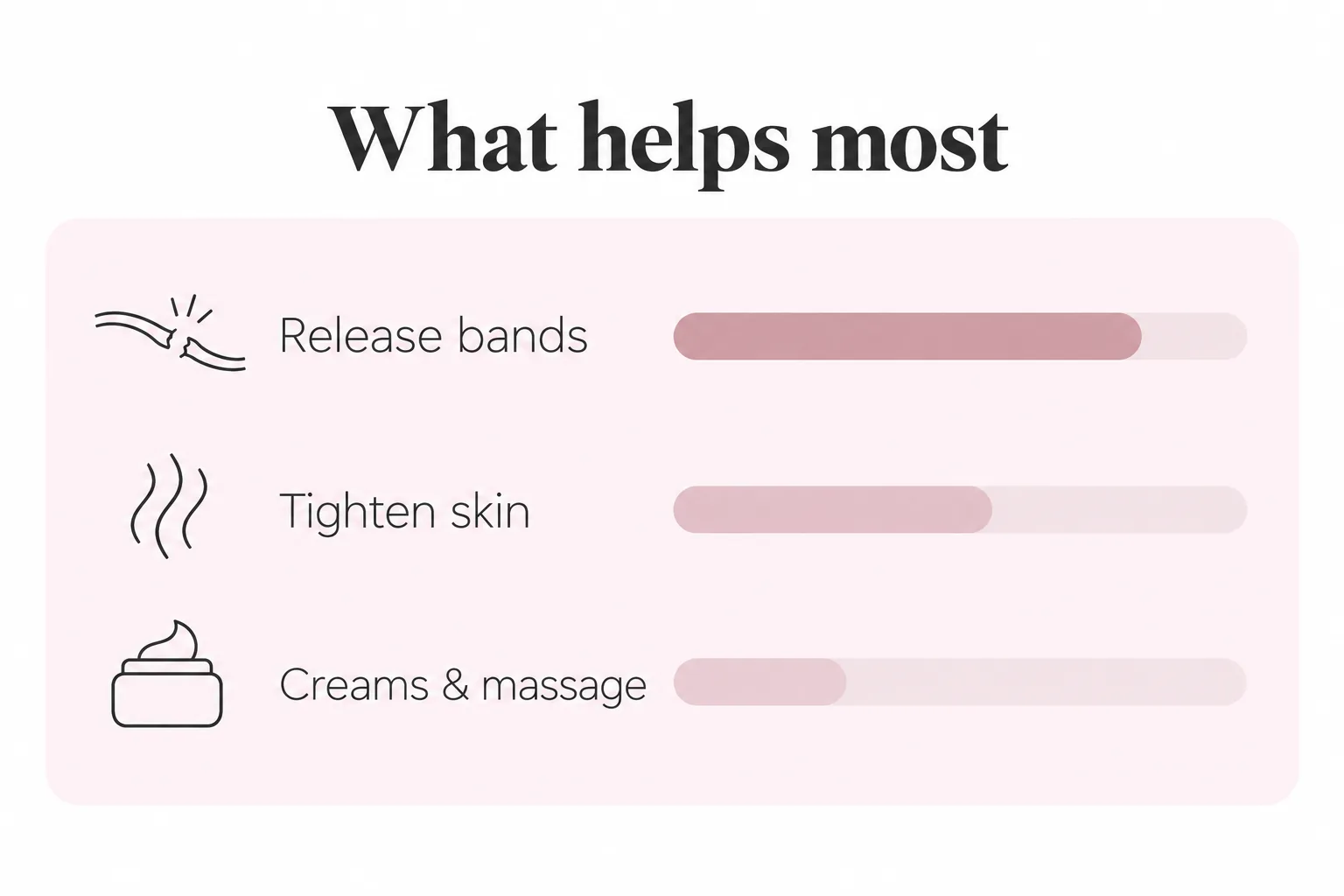
The quick verdict: treatments that release the fibrous bands under the skin work best for deep dimples. Energy-based skin tightening helps for a while. Creams, massage and lifestyle changes give mild support.
What Cellulite Actually Is (and Why It Is So Stubborn)
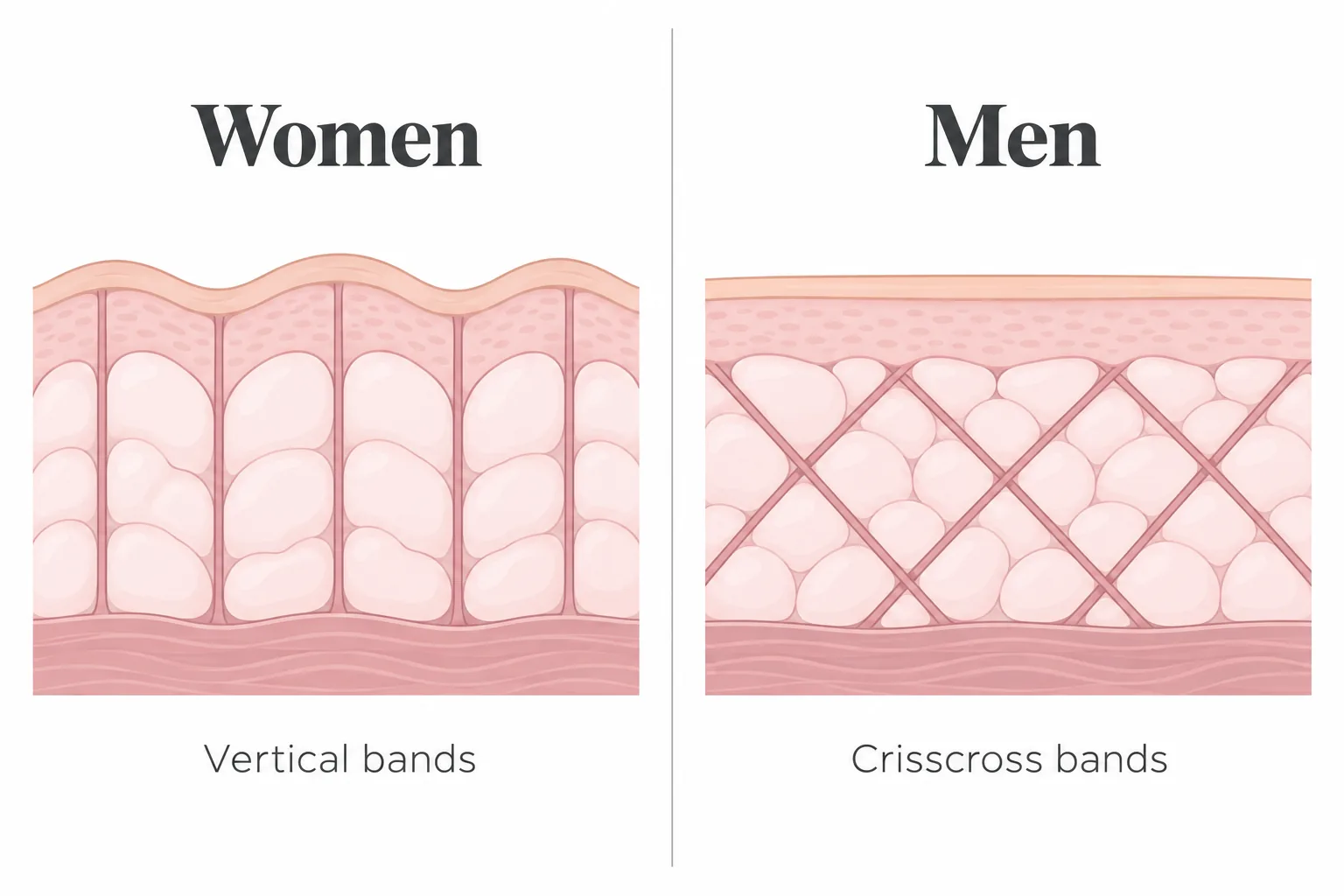
What is cellulite? Cellulite is a change in skin structure, not simply extra fat. Thin bands of connective tissue, called septae, hold the skin down while small pockets of fat push upward between them. The result is the familiar dimpled, ‘orange peel’ surface.
It is extremely common. A clinical review of current cellulite understanding and treatment notes that 80% to 90% of post-pubertal women are widely reported to be affected.
Anatomy explains why women are affected far more often than men. A review of the pathophysiology of cellulite reports that women’s septae run perpendicular to the skin, while men’s sit at 45° angles in a crisscross pattern. Vertical bands leave more room for fat to bulge upward.
Other factors that play a part:
- Genetics and family history
- Hormonal changes
- Thinner, less elastic skin with age
- Weight gain or loss
- Circulation and fluid retention
Cellulite is not a medical problem. It appears on people of every body size, including very slim and athletic people.
According to Dr. Mathew Avram, Associate Professor of Dermatology at Harvard Medical School and Director of the Dermatology Laser & Cosmetic Center at Massachusetts General Hospital:
> “We need to educate our patients that cellulite is a totally normal condition. We need to be skeptical as well. There is a consistent history of inflated and unsubstantiated claims of success.”
He also warns that the treatment industry has a long record of inflated, unproven claims, so patients should stay skeptical.
Cellulite vs Lipoedema vs Loose Skin
These three are often confused, and each needs a different approach.
| Condition | What it looks and feels like | What usually helps |
|---|---|---|
| Cellulite | Dimpled, uneven texture; not painful | Structural release, skin tightening, supportive care |
| Lipoedema | Symmetrical fat build-up in the legs, often tender or prone to bruising | Medical assessment by a GP or specialist |
| Loose or crepey skin | Thin, finely wrinkled skin that folds with movement | Collagen stimulation and skin tightening |
Lax skin can mimic cellulite or make existing dimples look deeper. That is why a proper cosmetic skin consultation matters before you spend money on any treatment.
Cellulite Grades: Why Your Starting Point Shapes Your Results
Practitioners often describe cellulite in three broad levels:
- Mild: only visible when you pinch the skin.
- Moderate: visible when standing, but not when lying down.
- Severe: deep dimples and ridges visible in most positions.
Mild cellulite often responds to treatments that improve skin quality. Deep, individual dimples usually need the bands underneath released. Knowing your grade sets honest expectations from the start.
Cellulite Treatments That Work Best: Releasing the Fibrous Bands
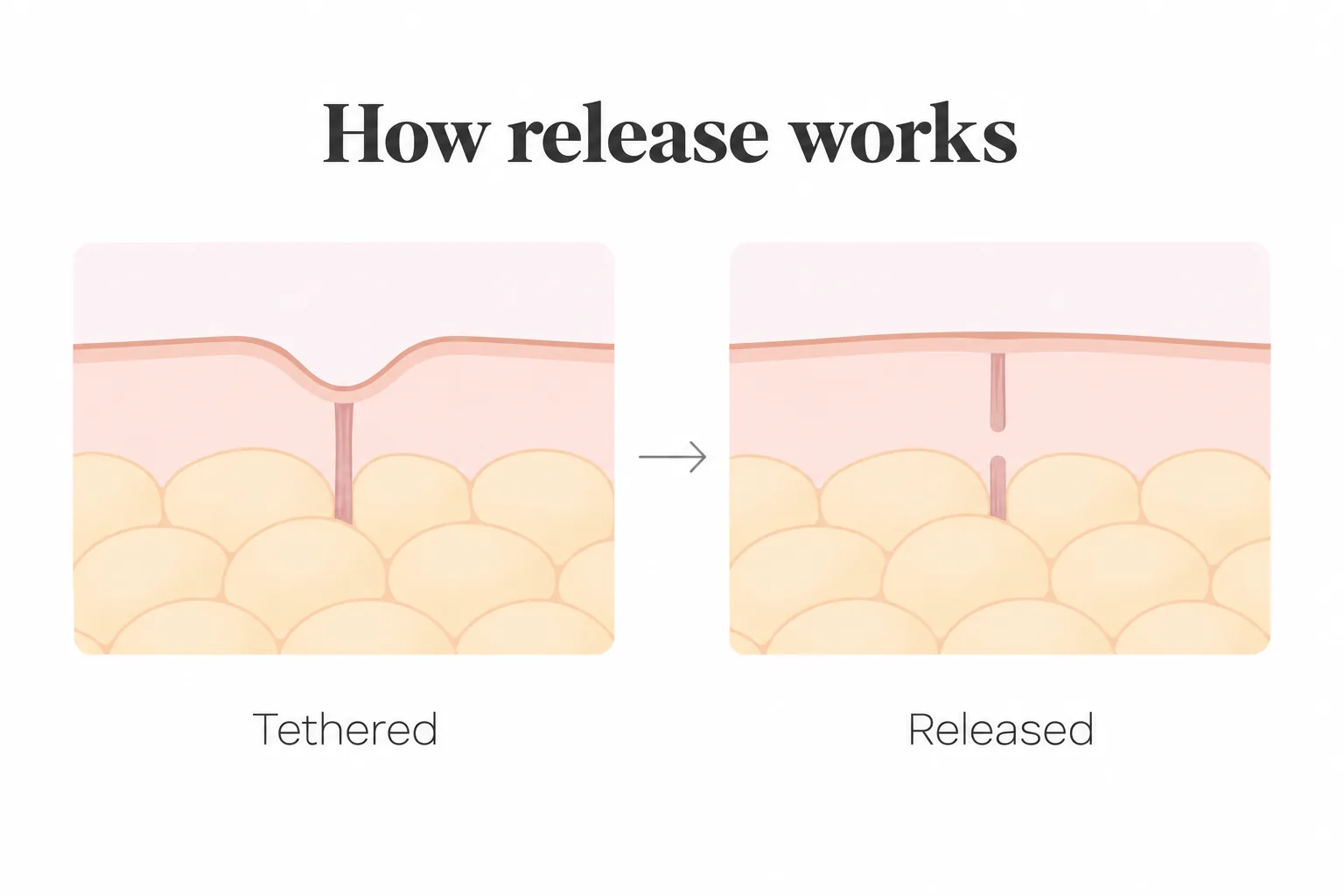
Because cellulite is structural, the most effective treatments target the septae directly.
Subcision uses a fine needle or small blade placed under the skin to cut the bands that tether it down. Once released, the skin can lift and the dimple softens.
Device-assisted versions control the depth and area of release more precisely. Laser-assisted methods use heat beneath the skin to release the bands.
These approaches suit distinct, individual dimples, most often on the buttocks and the back of the thighs. The American Academy of Dermatology’s review of what really works for cellulite reports a small study in which many patients had less cellulite for up to 3 years after this type of treatment.
What to expect afterwards:
- Bruising, swelling and tenderness are common.
- You may be asked to wear a compression garment.
- New dimples can still form over time.
Not everyone is a good candidate for structural release. An in-person assessment is essential.
Energy-Based Skin Tightening and Collagen Stimulation
Radiofrequency (RF), acoustic wave therapy and combined suction-and-heat devices work on the skin and surrounding tissue rather than cutting bands. They heat or stimulate deeper layers to firm the skin and improve texture.
Why does this help? Thicker, firmer skin hides the dimpling underneath more effectively. When RF heat reaches the dermis, collagen fibres contract and then trigger a longer rebuilding response, which we explain in our article on how RF microneedling changes collagen behaviour.
Results build gradually. Most people need a course of sessions, then maintenance treatments. These skin tightening procedures suit mild to moderate cellulite and skin laxity, not deep structural dimples.
Injectables and Fillers for Cellulite Dimples
Dermal fillers can lift shallow, individual depressions. Results are temporary and depend heavily on the injector’s skill.
You may have read about an injectable made specifically for cellulite. The American Board of Cosmetic Surgery’s guide to cellulite reduction treatments explains that QWO was the first injectable with FDA approval for cellulite, but its manufacturer stopped producing and selling it as of December 2022.
Treatment options in the UK and Channel Islands also differ from the US, so ask your practitioner what is genuinely available locally.
Creams, Massage and At-Home Options: What the Evidence Says
Topical products are the most heavily marketed cellulite solutions, and the least powerful.
- Retinol and retinoid creams: The University of New Mexico’s summary of cellulite research points to modest improvements in cellulite appearance with retinoid creams over a 6-month treatment period.
- Caffeine creams: any tightening effect is short-lived.
- Massage and dry brushing: these move fluid and can make skin look smoother for a short time. Mechanical massage devices work in a similar way.
Home products can support skin quality between clinic treatments, but they cannot release fibrous bands. Expect subtle change, not dramatic change.
Red flag: be wary of any product that claims to ‘eliminate’, ‘melt’ or ‘dissolve’ cellulite. No cream can do that.
Lifestyle Changes: Exercise, Weight and Nutrition
Strength training builds muscle beneath the skin, which can make dimpling on the thighs and legs less obvious. Some clients pair training with in-clinic body toning treatments for areas that don’t respond to exercise alone.
Yes – building muscle that sits under the fat/cellulite and pushes it up against the skin is how you can smooth out cellulite.Read on Reddit ↗
Weight change is less predictable. Losing weight improves cellulite for some people. For others, especially when the skin becomes looser, dimpling can look more noticeable.
Protein, hydration and a varied diet all affect skin quality. Our guide to how nutrition affects skin appearance covers this in more depth.
Smoking and unprotected sun exposure both weaken collagen, which can make cellulite more visible. Both are worth changing.
Lifestyle changes alone rarely clear established cellulite. They do help in-clinic results look better and last longer.
Does Anything Work for Cellulite on Thighs and Legs?
Thighs and legs are the areas people ask about most, and the answer depends on which part is affected.
- Back of the thighs and buttocks: often deep, structural dimples. Release techniques tend to work best here.
- Front and inner thighs: more often linked to thin or lax skin. Collagen stimulation and tightening usually suit these areas better.
Does Anything Work for Cellulite on Legs and Knees?
Around the knees and lower thighs, crepey skin and fluid retention often play a bigger role than tethering bands. Skin tightening, retinoid use and regular movement are usually more useful here than structural release.
For most people, combining approaches gives the most natural-looking results.
Cellulite Treatment Comparison Table
| Treatment | What it targets | Best for | Sessions | Downtime | How long results last | Strength of evidence |
|---|---|---|---|---|---|---|
| Structural release (subcision, device or laser-assisted) | Fibrous bands | Distinct, deep dimples | Often one | Bruising and swelling | Up to 3 years in a small study | Strongest |
| Energy-based devices (RF, acoustic wave) | Skin firmness and collagen | Mild to moderate cellulite, laxity | A course plus maintenance | Little to none | Temporary, with upkeep | Moderate |
| Dermal fillers | Individual shallow dimples | Small, isolated depressions | One or a few | Minor swelling | Temporary | Limited |
| Retinoid creams | Skin quality | Mild cellulite | Daily use | None | While use continues | Modest |
| Caffeine creams | Temporary tightening | Short-term smoothing | Daily use | None | Short-lived | Weak |
| Massage and dry brushing | Fluid movement | Short-term smoothing | Ongoing | None | Short-lived | Weak |
| Exercise and diet | Muscle tone and skin quality | Everyone, as support | Ongoing | None | While maintained | Supportive |
Treatments That Don’t Work (or Aren’t Worth the Money)
- Detox teas and supplements: there is no good evidence they change cellulite.
- Body wraps: any smoothing comes from temporary fluid loss and fades quickly.
- Liposuction: it removes fat but leaves the bands in place, so it is not a cellulite treatment.
- Quick-fix home gadgets: devices promising fast results rarely deliver lasting change.
A personalised treatment plan often makes better use of your budget than repeatedly buying products that do little.
What to Expect From a Cellulite Consultation at a Medical Spa
A good consultation should include:
- An assessment of your cellulite grade, skin laxity and the areas involved.
- A review of your medical history, including any signs that point to lipoedema or another condition.
- An honest conversation about whether treatment is worthwhile for you.
- A plan that may combine in-clinic care, professional skincare routines and lifestyle guidance.
At Guernsey Medi Spa, consultations focus on natural-looking results and long-term skin health rather than quick fixes. If you are unsure where to start, an assessment is a sensible first step.
Frequently Asked Questions About Cellulite Treatment
Related reading7 Best Non-surgical Face Lift Options For Sagging JowlsRead the guide →Frequently asked questions
Can cellulite ever be removed permanently?
Does losing weight get rid of cellulite?
Do cellulite creams actually work?
How many sessions does cellulite treatment take?
Why do slim people still have cellulite?
Key Takeaway: Realistic Results Are Achievable
So, does anything work for cellulite? Yes, when the treatment matches the cause. Cellulite is normal and cannot be cured, but its appearance can be reduced.
Structural release suits deep dimples, collagen stimulation suits laxity and mild texture, and lifestyle and skincare support both. A professional assessment is the best way to find out which approach fits your skin.
