
If your skin has started to feel less firm, particularly around the jawline, cheeks, or neck, and you’re not ready for surgery or injectables, Sofwave may be the treatment you’ve been researching.
How does Sofwave work for skin tightening, and does the technology actually deliver on what it promises?
In this guide, you’ll find a clear explanation of the mechanism, realistic expectations, a comparison to similar treatments, and honest guidance on who it suits best.
How Does Sofwave Work for Skin Tightening?
Sofwave is a non-invasive ultrasound-based skin tightening treatment that targets the mid-dermis, the layer of skin where collagen is produced and where laxity begins.
Unlike laser or radiofrequency treatments, it does not break the skin’s surface. The device delivers synchronised ultrasound energy to a precise depth of approximately 1.5mm, generating controlled warmth that triggers the skin’s natural collagen remodelling response.
How sofwave works for skin tightening comes down to a simple principle: controlled internal heating causes the skin to repair and rebuild collagen, gradually producing firmer, tighter-looking skin over time.
| Sofwave | Basic Skincare | Surgical Facelift |
| Non-invasive | Non-invasive | Invasive |
| Targets mid-dermis | Surface only | Full tissue lift |
| Minimal downtime | None | Weeks of recovery |
| Gradual tightening | Minimal tightening | Immediate structural change |
| Suitable for early laxity | Preventative only | Best for significant sagging |
The Technology Behind Sofwave Skin Tightening
The Role of Ultrasound Energy in Skin Tightening
Sofwave uses a proprietary technology called SUPERB, which stands for Synchronous Ultrasound Parallel Beam.
This system delivers multiple ultrasound beams simultaneously to the mid-dermis, producing a uniform thermal effect at the target depth without affecting the skin surface above or the tissue below.
The targeted temperature in the dermis reaches approximately 60–65°C, which is enough to stimulate collagen remodelling without causing surface damage.
A built-in cooling mechanism protects the outer skin layer throughout the treatment.
Why Collagen Stimulation Matters for Ageing Skin
Collagen is the structural protein that keeps skin firm and resilient. From the mid-20s onward, the body produces less of it each year. As collagen breaks down, the skin loses its ability to hold its shape and begins to sag or look less defined.
How sofwave works for skin tightening at a biological level is by creating a controlled thermal stimulus that prompts fibroblasts to produce new collagen. The result is structural skin improvement, not surface-level smoothing.
| Skin Layer | Sofwave Effect |
| Epidermis (surface) | Protected by cooling system |
| Mid-dermis (1.5mm) | Primary target for ultrasound energy |
| Deep dermis | Not directly targeted |
| Collagen network | Stimulated to rebuild and reorganise |
What Results Can You Realistically Expect From Sofwave?
Sofwave produces gradual, natural-looking skin tightening. It is not a surgical lift, and it does not change facial structure.
For clients with mild to moderate skin laxity, the results are a visible improvement in firmness, a more defined jawline, and softer fine lines, with a look that appears refreshed rather than treated.
Understanding how sofwave works for skin tightening also means understanding the timeline. Collagen does not rebuild overnight.
The full improvement develops over several weeks as new collagen organises and matures beneath the skin.
Why Sofwave Results Are Subtle Rather Than Dramatic
This is not a weakness of the treatment. It reflects how collagen remodelling works biologically. The improvement looks natural because it comes from within.
For many clients, this is exactly the outcome they want: skin that looks like a better version of itself, not skin that announces a procedure.
Which Areas Respond Best to Sofwave Treatment
| Treatment Area | Expected Response |
| Jawline and jowls | Good to strong improvement |
| Brow lifting | Visible lift often seen early |
| Cheeks and mid-face | Moderate improvement |
| Neck and décolletage | Gradual, progressive tightening |
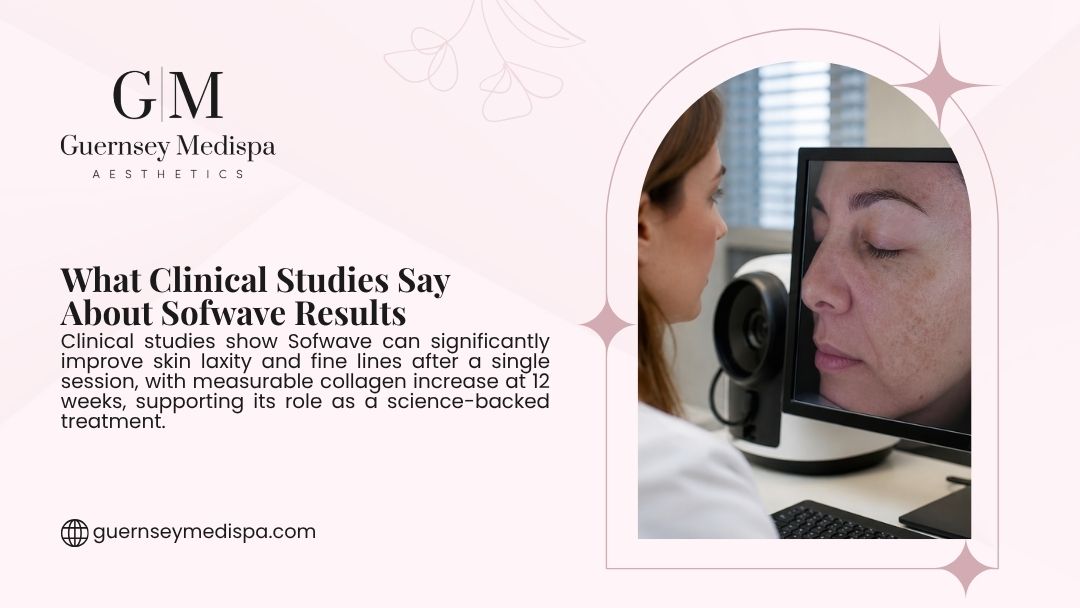
Does Sofwave Hurt and What Does the Treatment Feel Like?
Most clients describe the sensation as brief, warm pulses across the skin. The intensity varies by area. Bonier areas like the brow and jawline tend to feel more noticeable, while areas with more soft tissue feel milder.
What Happens During a Sofwave Appointment Step by Step
- A consultation and skin assessment to confirm suitability
- Ultrasound gel is applied to the treatment area
- The Sofwave handpiece is passed over the skin in sections
- Each pulse delivers ultrasound energy to the mid-dermis
- The built-in cooling system activates simultaneously to protect the surface
- The session typically takes 30–45 minutes depending on the area
| Treatment Zone | Comfort Level |
| Cheeks and mid-face | Low to mild |
| Neck and jawline | Mild to moderate |
| Brow and forehead | Moderate |
| Décolletage | Low |
No topical numbing cream is usually required, though some clinics offer it for sensitive clients. Discomfort is short-lived and resolves as soon as treatment ends.
Sofwave Results Timeline: When Will You See a Difference?
How sofwave works for skin tightening is a process that continues long after the session ends. The biological response unfolds in stages, and clients who understand this timeline tend to be far more satisfied with their results.
| Timepoint | What’s Happening | What You May Notice |
| Week 1 | Mild redness settles, collagen response begins | Slight glow, skin feels slightly tighter |
| Week 4 | New collagen starting to form | Subtle firmness improvement |
| Week 8 | Collagen production actively increasing | More noticeable tightening |
| Week 12+ | Peak collagen remodelling phase | Best visible results |
The gradual nature of the improvement is similar to how collagen-stimulating treatments generally work.
If you’ve already read about how long microneedling takes to show results, the biological principle is comparable, though the mechanism and depth of treatment differ between the two.
How Many Sessions Do You Need and How Long Do Results Last?
Sofwave is often described as a single-session treatment, which sets it apart from many other collagen-stimulating options. Most clients receive one session and then allow the full collagen remodelling process to complete over the following three to four months.
| Protocol | Detail |
| Initial sessions | Typically one session |
| Results visible from | 4–8 weeks |
| Peak results | Around 12 weeks post-treatment |
| Result longevity | 12–18 months in most clients |
| Maintenance | One session annually, as needed |
Individual results depend on age, skin quality, and the degree of laxity at the time of treatment. Starting earlier, when laxity is mild, generally produces the most satisfying outcomes.
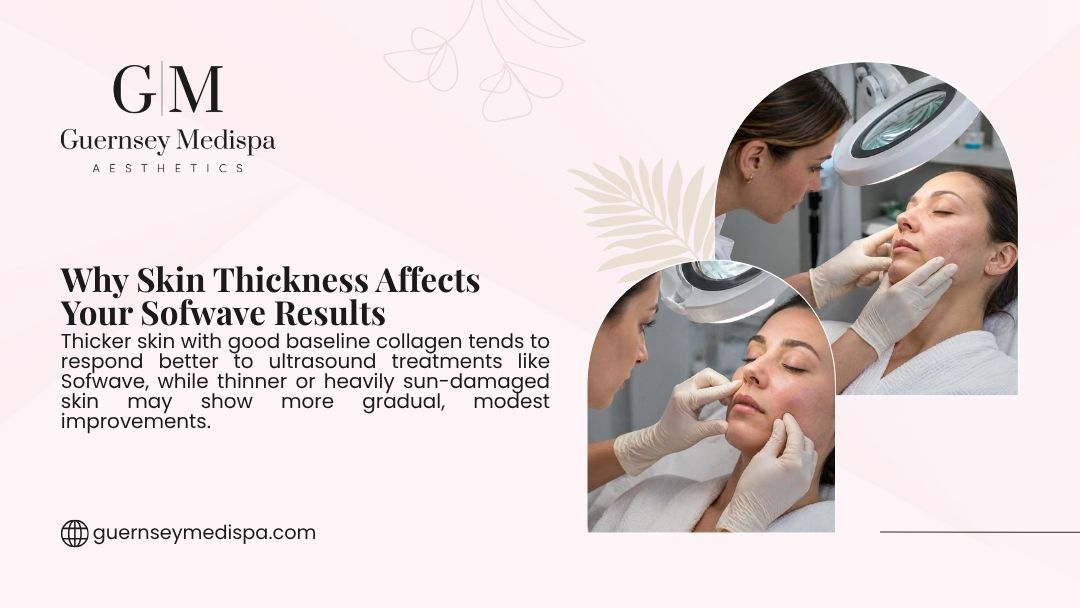
Who Is the Ideal Candidate for Sofwave Skin Tightening?
Good Candidates
Sofwave produces the strongest results for clients who:
- Are in their 30s to 60s with mild to moderate skin laxity
- Want a subtle, natural improvement rather than a dramatic change
- Are not ready for or not interested in surgical options
- Have good overall skin quality with some loss of firmness
- Are looking for a treatment with minimal downtime
Less Suitable Candidates
Sofwave is less likely to meet expectations for those who:
- Have significant skin sagging or excess skin that requires surgical lifting
- Expect immediate or dramatic transformation
- Have certain medical implants or conditions near the treatment area
| Factor | Good Candidate | Less Suitable |
| Laxity level | Mild to moderate | Severe or excess skin |
| Age range | 30–60+ | N/A |
| Goal | Natural tightening | Dramatic structural change |
| Downtime tolerance | Minimal | Comfortable with extended recovery |
Sofwave vs Other Skin Tightening Treatments
Many clients arrive having already considered RF microneedling, lasers, or other energy-based treatments. Each works through a different mechanism and suits different concerns.
Understanding what RF microneedling does differently than regular microneedling, for example, helps clarify that RF works on scar remodelling and surface texture as well as mild tightening, whereas Sofwave targets deeper laxity without touching the skin surface.
| Technology | Mechanism | Downtime | Depth | Best For |
| Sofwave | Ultrasound, mid-dermis | Minimal | 1.5mm | Laxity, fine lines |
| RF microneedling | Needles + radiofrequency heat | 2–5 days | Up to 2.5mm | Scars, texture, tightening |
| Fractional laser | Light energy, ablation | 5–14 days | Variable | Resurfacing, pigmentation |
| Surgical facelift | Structural tissue lift | Weeks | All layers | Severe laxity |
Safety, Side Effects, and Downtime After Sofwave
Sofwave carries a strong safety profile across all skin types. The built-in cooling system protects the surface during treatment, reducing the risk of surface irritation.
Common, temporary effects:
- Mild redness in the treated area, settling within a few hours
- Slight warmth or sensitivity immediately after treatment
- Occasional mild swelling, resolving within 24–48 hours
Rare effects:
- Temporary numbness or tingling in isolated areas
- Short-lived bruising in sensitive skin types
Most clients return to normal activities the same day.
For clients also managing acne scarring alongside skin laxity, combining Sofwave with microneedling for acne scars on cheeks is an approach worth discussing during consultation, as the two treatments address different skin layers and can complement each other without overlap.
Frequently Asked Questions
How does Sofwave work for skin tightening at a clinical level?
Sofwave delivers synchronised ultrasound energy to the mid-dermis at approximately 1.5mm depth. The targeted heat triggers collagen remodelling in the dermis, producing gradual skin firming over the following weeks and months.
Is Sofwave better than RF microneedling for skin tightening?
They serve different goals. Sofwave targets deeper laxity using ultrasound with no surface disruption. RF microneedling works through needle-based collagen induction combined with heat, making it more effective for scar remodelling and surface texture.
When will I see results after Sofwave treatment?
Early subtle changes are possible within four weeks. Most clients see their clearest improvement at the 8 to 12-week mark, as collagen continues to rebuild and mature beneath the skin.
Does Sofwave cause any pain during treatment?
Discomfort is generally mild to moderate and brief, described as warm pulses. Bonier areas feel slightly more noticeable. Most clients do not require numbing cream, and any sensation resolves immediately when the device moves to the next area.
How long do Sofwave results last?
Results typically last 12 to 18 months for most clients, depending on age, skin quality, and lifestyle. Annual maintenance sessions help sustain the collagen benefits over time.
Backed by 15+ Years of Clinical Experience at Guernsey Medi Spa
How sofwave works for skin tightening is straightforward once you understand collagen biology: controlled ultrasound heat prompts the skin to rebuild its own structural support from within.
The results are gradual, natural, and suited to clients who want firmer skin without surgery or significant downtime.
At Guernsey Medi Spa, every Sofwave treatment begins with a thorough skin assessment and an honest conversation about what the treatment can and cannot deliver for your specific concerns.
With over 15 years of experience and more than 3,500 satisfied clients, our approach is built on realistic outcomes.
Book a consultation today and find out whether Sofwave is the right step for your skin.
