
Most people searching this topic aren’t confused about microneedling itself. The real question is simpler: what does RF microneedling do differently than regular microneedling, and is that difference actually worth the extra cost and recovery time?
Both treatments use fine needles to create controlled micro-injuries. Both stimulate collagen. But that’s roughly where the similarity ends.
The addition of radiofrequency energy changes what happens beneath the skin and produces noticeably different outcomes for specific concerns.
This guide breaks down the mechanism, the results, the recovery, and exactly who benefits most from each.
What Does RF Microneedling Do Differently Than Regular Microneedling?
Regular microneedling, also called collagen induction therapy, creates tiny punctures in the skin using a motorised pen. These micro-injuries trigger the body’s healing response, producing new collagen and elastin.
The process works primarily at the epidermal and superficial dermal level.
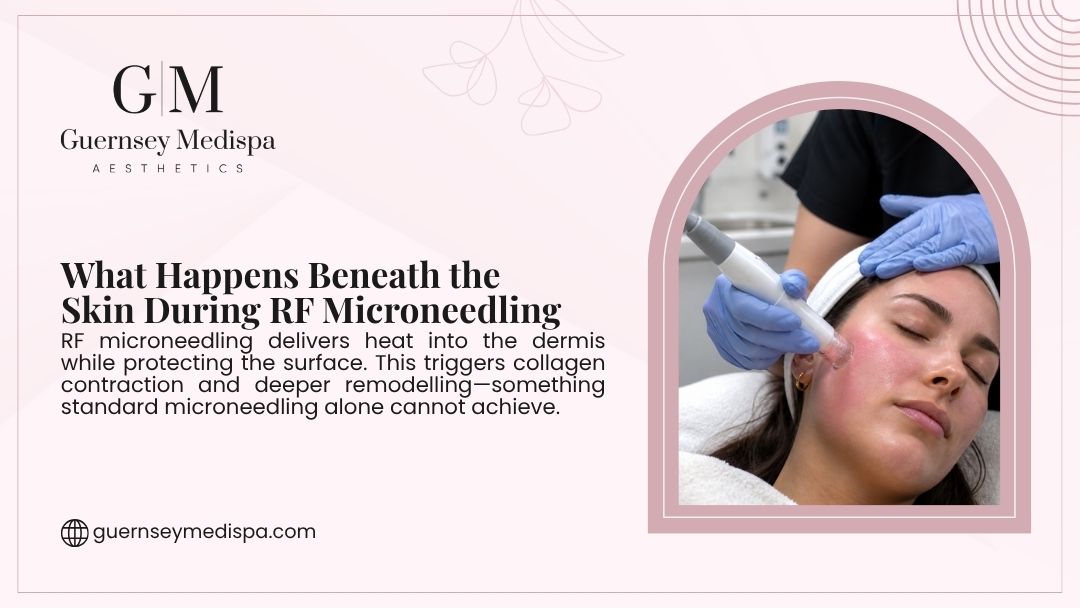
RF microneedling does the same thing, then adds a second layer of stimulation. As the needles penetrate the skin, they emit radiofrequency energy that generates controlled heat in the deeper dermis.
That heat causes immediate tissue contraction and triggers a more intense collagen remodelling response than needles alone can produce.
The result is two biological processes working simultaneously: wound healing from the needle injuries, and thermal remodelling from the radiofrequency heat.
| Feature | Regular Microneedling | RF Microneedling |
| Mechanism | Needle micro-injury only | Needle + radiofrequency heat |
| Depth of action | Superficial dermis | Deep dermis |
| Skin tightening | Mild | Moderate to significant |
| Target concerns | Texture, mild scars, glow | Laxity, deep scars, wrinkles |
| Cost level | Lower | Higher |
How RF Energy Changes Collagen Behaviour
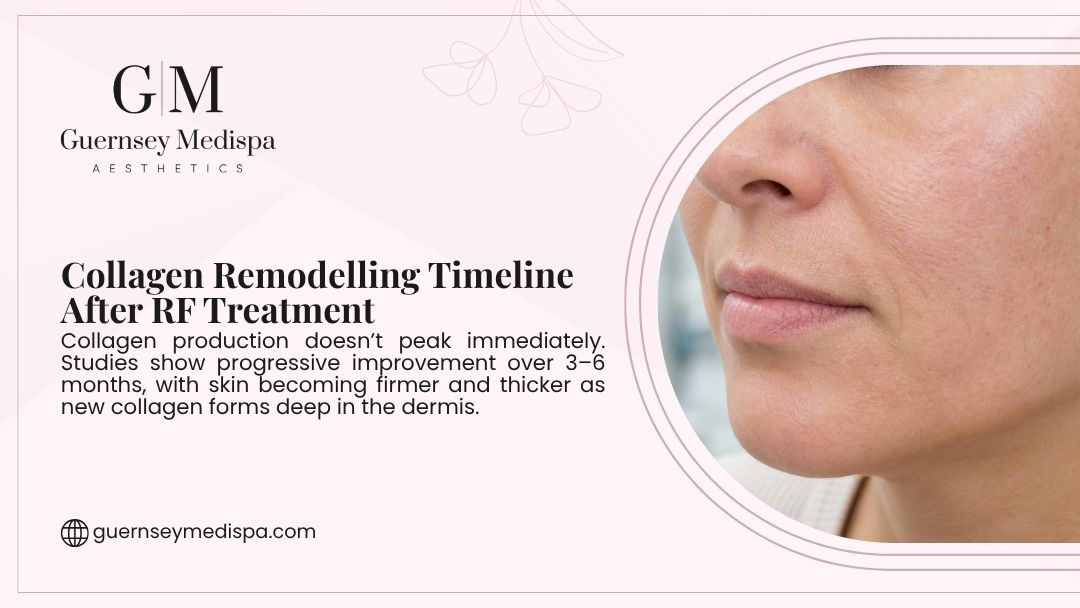
When radiofrequency heat reaches the dermis, collagen fibres contract immediately. That contraction then triggers a sustained rebuilding response over the following weeks and months.
Biopsy studies confirm RF microneedling increases dermal thickness by an average of 15–20% at three months post-treatment.
Research published in Frontiers in Medicine found RF microneedling can increase skin thickness by over 40% while improving firmness measurements, verified through ultrasound imaging.
Standard microneedling produces no thermal contraction, which means it cannot achieve this level of structural change.
Why Depth Matters in Skin Treatments
Clinical evidence confirms the optimal needle depth for RF microneedling is 1.3 to 2mm, targeting the reticular dermis. Standard microneedling also reaches the dermis, but without heat, the collagen response at those deeper layers is considerably less intense.
How Each Treatment Works on Your Skin
| Skin Layer | Regular Microneedling | RF Microneedling |
| Epidermis | Micro-injury, renewal | Protected during treatment |
| Superficial dermis | Collagen stimulation | Collagen stimulation + heat |
| Deep dermis | Limited response | Primary target |
| Heat involved | No | Yes |
| Tightening effect | Mild | Moderate to significant |
Regular microneedling relies entirely on the wound-healing cascade. Fibroblasts activate, produce collagen, and the skin gradually rebuilds.
Knowing how long microneedling takes to show results is important here, because early changes appear within weeks but deeper structural improvement develops over months regardless of which type you choose.
RF microneedling adds thermal remodelling on top of that process. The heat eliminates aged fibroblasts and replaces them with more active ones, producing a stronger and more sustained collagen response.
This is why improvements in lax or significantly aged skin tend to be more visible with RF than with standard microneedling.
RF Microneedling vs Regular Microneedling Results: What Actually Improves?
| Skin Concern | Regular Microneedling | RF Microneedling |
| Surface texture | High | High |
| Mild acne scars | Moderate to high | High |
| Deep or stubborn scars | Moderate | High |
| Fine lines | Moderate | Moderate to high |
| Skin laxity | Low to moderate | Moderate to significant |
| Skin tightening | Limited | More consistent |
For acne scarring, the difference is meaningful. One clinical study found that 80.64% of patients who received RF microneedling achieved a two-grade improvement in scar grading.
A long-term study reported the RF microneedling group had a three-year relapse rate of just 24%, compared to 75% for ablative laser treatment.
For a closer look at how standard microneedling addresses cheek scarring, including scar types and session timelines, our article on microneedling for acne scars on cheeks covers what to realistically expect at each stage.
Pain, Downtime, and Recovery: What You Actually Feel
This is where many people have the wrong expectations. RF microneedling does involve slightly more discomfort and a longer recovery than standard microneedling, but neither experience is extreme.
| Experience | Regular Microneedling | RF Microneedling |
| Discomfort (with numbing) | 3–4 out of 10 | 4–6 out of 10 |
| Redness after treatment | 24–48 hours | 2–4 days |
| Swelling | Mild, 1–2 days | Mild to moderate, 2–3 days |
| Return to normal activities | Next day | 2–5 days |
Both treatments use topical numbing cream. The extra warmth and pressure during RF treatment come from the radiofrequency pulses, not from additional needle depth alone.
What to expect day by day after RF microneedling:
- Days 1–2: Redness, warmth, and mild swelling similar to a moderate sunburn
- Days 3–5: Redness fades, skin may feel tight or look slightly dry
- Days 5–7: Most visible signs resolve, early glow begins
- Weeks 2–4: Skin texture starts to visibly improve
- Months 2–3: Peak collagen remodelling phase
Which Treatment Should You Choose Based on Your Skin Concern?
| Concern | Best Treatment | Why |
| Surface texture or mild scars | Regular microneedling | Sufficient collagen response |
| Early ageing, general glow | Regular microneedling | Effective, lower cost |
| Deep acne scars | RF microneedling | Reaches deeper scar tissue |
| Skin laxity or early sagging | RF microneedling | Thermal tightening advantage |
| Maintenance after a series | Regular microneedling | Sustains results affordably |
When Regular Microneedling Is Actually Enough
Not everyone needs RF. If your main concern is skin texture, a mild glow, or early surface-level scarring, standard microneedling delivers strong results without the added cost or recovery time.
Acne Scars vs Ageing Skin vs Texture Issues
For acne scars, the choice depends on depth. Rolling and shallow boxcar scars respond well to standard microneedling over a series. Deep or stubborn scars tend to respond better when radiofrequency heat is part of the process.
For aging skin with laxity, RF holds a clear advantage. Clinical research shows a single session achieves roughly 37% of the skin tightening seen with a surgical facelift.
Cost Differences and Why RF Microneedling Is More Expensive
RF devices range from $40,000 to $80,000 compared to $2,000 to $8,000 for standard microneedling pens.
Practitioners also require additional training to manage energy settings, needle depth, and skin conductivity safely. That expertise is built into the treatment cost.
| Treatment | Cost Per Session | Sessions Needed | Total Estimated |
| Regular microneedling | $200–$700 | 3–6 | $600–$4,200 |
| RF microneedling | $600–$2,400 | 3–4 | $1,800–$7,200 |
Many clinics offer package pricing that reduces total RF costs by 15–30%. Given that RF often requires fewer sessions for comparable structural change, the overall investment may be closer than the per-session price suggests.
Safety, Risks, and Who Should Avoid RF Microneedling
Both treatments carry a strong safety profile when performed by trained professionals. Temporary redness, sensitivity, and swelling are expected. Serious complications are uncommon.
Who should approach RF microneedling with caution:
- Those with active acne or open skin infections in the treatment area
- Individuals with metal implants near the treatment site
- People with certain inflammatory skin conditions like active rosacea
- Those who are pregnant
- Individuals with a history of keloid scarring
Why Provider Skill Matters More Than Device Brand
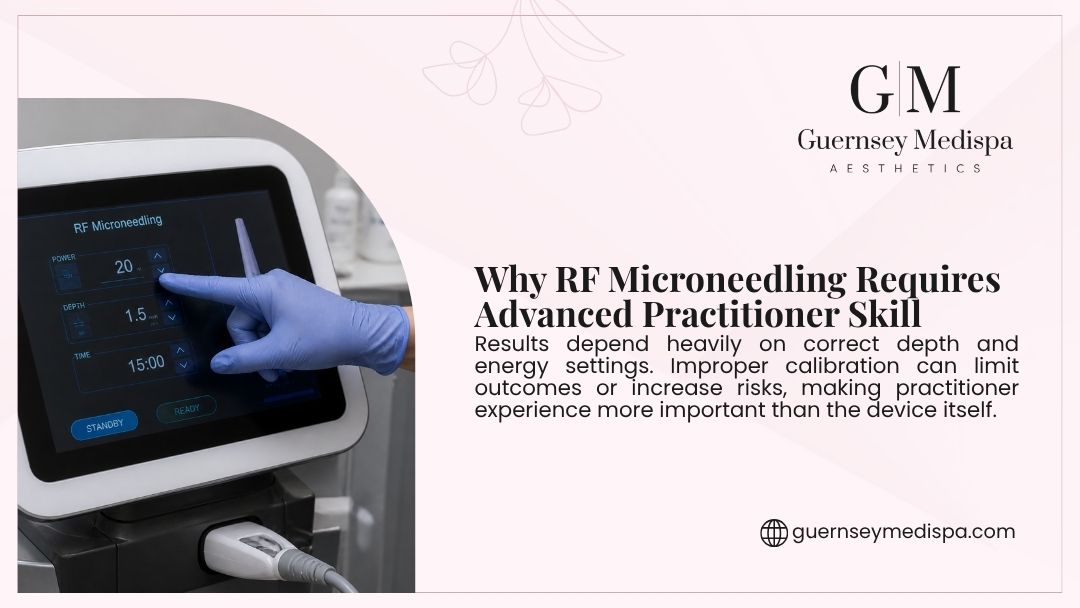
The device does not determine your results. The practitioner’s ability to calibrate needle depth, energy settings, and pulse duration to your specific skin type is what separates an effective treatment from a poor outcome.
The questions worth asking before booking are about training, volume of treatments performed, and whether they assess skin before adjusting settings.
How Many Sessions Do You Actually Need for Visible Results?
| Concern | Regular Sessions | RF Sessions | Timeline |
| Surface texture, mild ageing | 3–4 | 2–3 | 2–4 months |
| Mild to moderate acne scars | 4–6 | 3–4 | 3–5 months |
| Deep scars or skin laxity | 5–6+ | 3–4 | 4–6 months |
| Maintenance | 1–2 per year | 1 per year | Ongoing |
Most patients see approximately 20–30% improvement per RF microneedling session, with cumulative results building across the full series. Peak collagen remodelling continues for 3–6 months after the final session, so the full outcome takes time to develop.
For clients managing skin laxity alongside other concerns, sofwave for skin tightening uses a different energy mechanism and can complement a microneedling programme where broader or deeper tightening is part of the plan.
Frequently Asked Questions
What does RF microneedling do differently than regular microneedling in terms of skin results?
RF adds radiofrequency heat energy through the needle tips during treatment. That heat causes immediate tissue contraction in the deeper dermis and triggers a more intense collagen remodelling response.
The outcome is stronger improvement in skin laxity, deeper scarring, and wrinkle depth compared to standard microneedling.
Is RF microneedling better than regular microneedling for all concerns?
No, for surface texture, mild scarring, or general skin maintenance, standard microneedling delivers solid results at a lower cost and with less downtime. RF earns its place when laxity, deep scars, or significant wrinkle depth is the primary goal.
Does RF microneedling hurt more?
With topical numbing cream, most patients rate RF at 4–6 out of 10 for discomfort compared to 3–4 out of 10 for standard microneedling. The added sensation comes from the thermal energy, not additional needle pressure.
How long does it take to see results from RF microneedling?
Early improvements in texture appear within 2–4 weeks. Deeper structural changes, including scar reduction and skin tightening, develop over 3–6 months as new collagen matures beneath the surface.
Is RF microneedling safe for darker skin tones?
Yes, unlike laser treatments, RF microneedling does not target skin pigment. Clinical studies confirm a strong safety profile across Fitzpatrick skin types III–V with low rates of post-inflammatory hyperpigmentation when treatment is performed correctly.
Backed by 15+ Years of Clinical Experience at Guernsey Medi Spa
The choice between RF and standard microneedling comes down to what your skin actually needs. Standard microneedling works well for texture, early ageing, and surface-level concerns.
RF microneedling earns its place when deeper collagen remodelling, skin tightening, or stubborn scarring is the goal.
At Guernsey Medi Spa, every treatment plan starts with a thorough skin assessment, not a standard protocol.
With over 15 years of clinical experience and more than 3,500 satisfied clients, we help you choose the treatment that fits your skin, not just the most talked-about option.
Book a consultation today and get a clear, honest recommendation based on what your skin actually needs.
