
For most new parents, postpartum hair loss stops somewhere between 6 and 12 months after birth, once hormones and the hair growth cycle settle. If you are searching “postpartum hair loss when does it stop” with a brush full of hair in your hand, the short answer is: it is almost always temporary.
This is shedding, not true balding. The follicles stay healthy and keep producing new hair.
Hair and skin changes after pregnancy can affect how you feel about your appearance. This guide sets out what is normal, what helps and when to get checked.
Why Hair Falls Out After Pregnancy
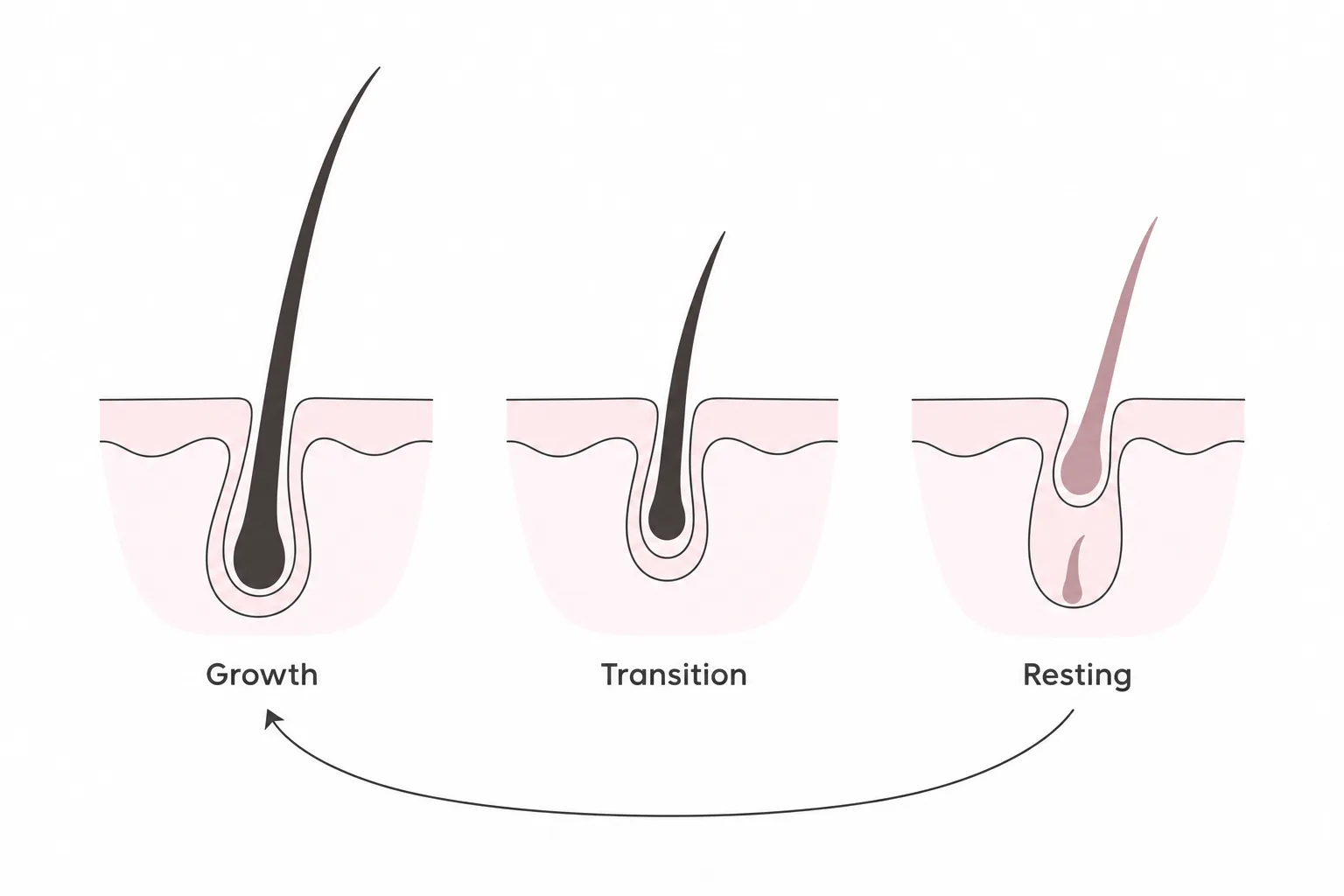
What is postpartum hair loss? It is a temporary form of telogen effluvium, where a large number of hairs move into the resting (shedding) phase at the same time.
During pregnancy, higher estrogen keeps more hairs in the growth phase, so you lose fewer than usual. After birth, estrogen drops sharply. As BabyCenter’s guide to coping with postpartum hair loss explains, more follicles then enter the resting stage and begin shedding three to five months later.
Much of what falls out is the extra hair you kept during pregnancy. That is why it can feel so dramatic.
How the Hair Growth Cycle Works
Each hair moves through three phases:
- Growth: the hair actively lengthens, usually for years
- Transition: a short phase where growth stops
- Resting: the hair sits in the follicle, then falls out as a new one starts
The resting phase explains the delay. Hairs pushed into rest around birth only shed months later.
You tend to get hair loss around 3 months after a trauma to your body (labour). It lasts about 3-6 months. enters the falling out stage all at …Read on Reddit ↗
Postpartum Hair Loss Timeline: When It Starts, Peaks and Ends
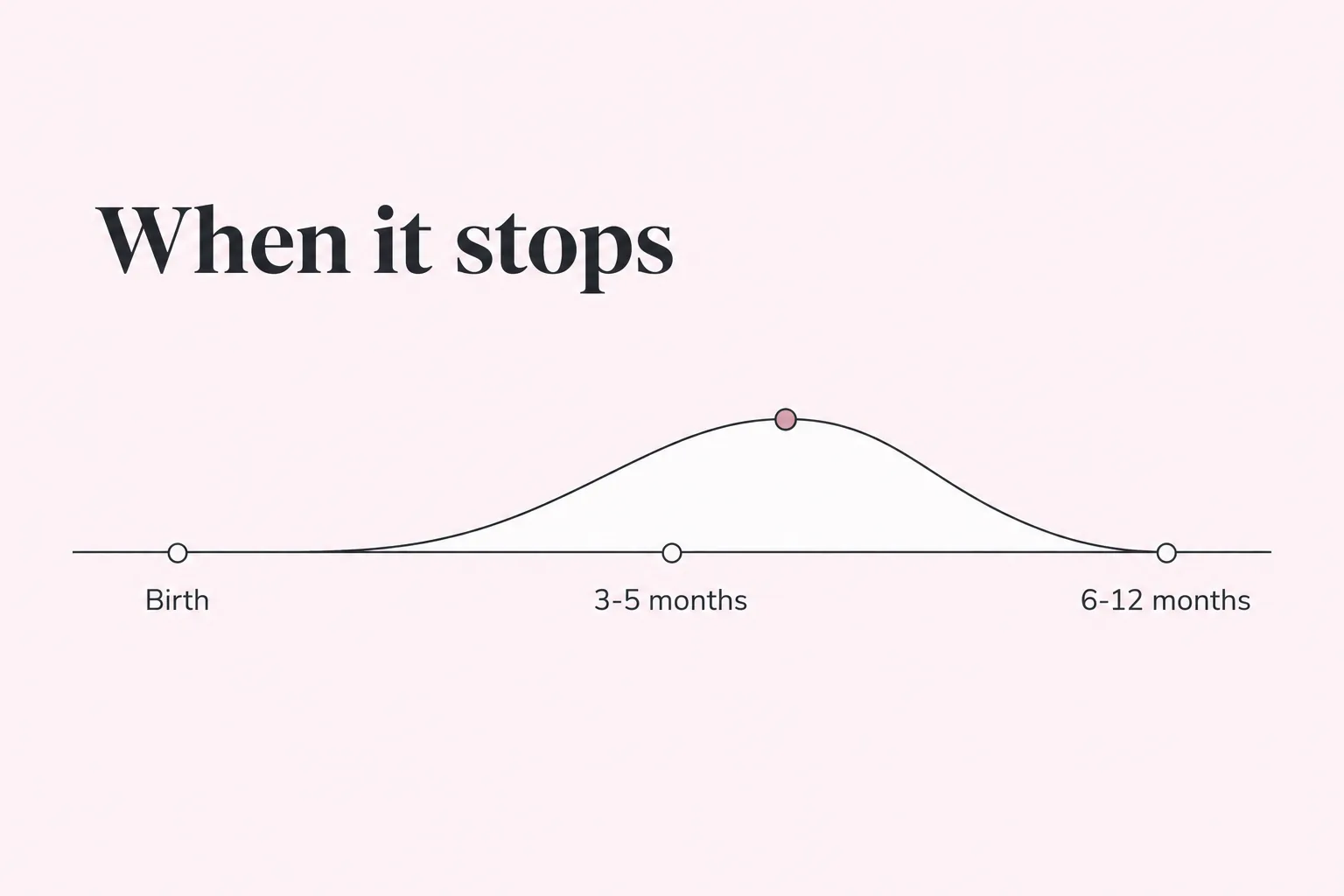
So when does postpartum hair loss start and end? Timing varies between people, and even between pregnancies, but the pattern is fairly consistent.
| Stage | Typical timing | What you may notice |
|---|---|---|
| Start | Around 3–5 months after birth | More hair in the shower, brush and pillow |
| Peak | The first few months of shedding | The heaviest daily hair fall |
| Slowing | Gradually over the following months | Fewer loose hairs day to day |
| Recovery | Often around 6–12 months after birth | Short new hairs and returning fullness |
Postpartum Hair Loss: When Does It Stop for Most People?
For many people, shedding eases within several months of starting, and usual fullness returns around their baby’s first birthday. Regrowth takes longer for some, so a slower recovery is not automatically a warning sign.
What Postpartum Hair Loss Looks Like
- Clumps of hair in the drain or on your clothes
- Thinning at the temples and along the hairline
- Short, wispy “baby hairs” that stick up as they regrow
Patchy bald spots or a steadily widening part are not the typical pattern and should be checked.
Does Postpartum Hair Loss Ever Stop?
Yes. For most people it is self-limiting and hair density returns. Some may notice their hair feels slightly different in texture or thickness afterwards.
If heavy shedding continues well past the usual window, something else may be going on. See the doctor section below.
How to Reduce Postpartum Hair Loss Naturally
No home method stops telogen effluvium. Gentle care does reduce breakage and helps hair look fuller while you wait.
| Tip | Why it helps |
|---|---|
| Volumising shampoo | Lifts the roots so thinning looks less obvious |
| Lightweight conditioner | Detangles without weighing hair down |
| Wide-tooth comb | Less pulling on fragile strands |
| Loose hairstyles | Avoids tension at the hairline |
| Less heat and chemical processing | Reduces breakage of existing hair |
Eat balanced meals with enough protein and iron-rich foods. Sleep and stress are hard to control with a newborn, so rest when you can and accept help when it is offered.
Will Cutting Your Hair Stop Postpartum Hair Loss?
No. A haircut does not change how many hairs shed from the follicle.
A shorter or layered cut can still help. Lighter hair looks fuller, shows thinning less and is easier to manage with a baby.
Will Taking Prenatal Vitamins Help With Postpartum Hair Loss?
Prenatal vitamins do not prevent the normal hormonal shed. Your GP or midwife may still advise them, for example while breastfeeding.
Correcting a real deficiency, such as low iron, can matter. Ask a professional before adding hair supplements, especially if you are breastfeeding.
When to See a Doctor About Hair Loss After Birth
Book an appointment with your GP if you notice:
- Heavy shedding that continues beyond about a year after birth
- Bald patches, a widening part or severe overall thinning
- Extreme tiredness, dizziness, feeling cold or palpitations
These symptoms can point to thyroid problems or iron deficiency. Your GP can arrange blood tests to check thyroid function and iron levels.
Professional Support for Thinning Hair After Pregnancy
Clinical care is not a cure for normal postpartum shedding, which resolves on its own. It can be an option once medical causes are ruled out, the shedding phase has passed and hair still feels thinner than before.
A personalised consultation looks at your scalp, hair history and goals, rather than relying on one-size-fits-all products. You can read more about our hair restoration treatments and consultations.
Many new parents also notice their skin looks duller after months of disrupted sleep. Our guide on getting glass skin naturally without makeup covers simple routines that fit around a busy schedule.
Postpartum Hair Loss FAQs
When does postpartum hair loss stop?
Is it normal to lose clumps of hair postpartum?
Does breastfeeding make postpartum hair loss last longer?
Will postpartum hair loss happen with every pregnancy?
Can I have hair treatments while breastfeeding?
Key Takeaway on When Postpartum Hair Loss Stops
Shedding usually starts around 3–5 months after birth and settles for most people by 6–12 months.
Gentle care helps your hair look and feel better in the meantime. If loss continues past a year or comes with other symptoms, see your GP, and once the cause is clear, professional support is available.
