
This article breaks down the main non-surgical treatment categories, what each one actually does, and who is likely to benefit most from each approach.
Best Non-Surgical Face Lift Options for Sagging Jowls at a Glance
| Treatment | Best For | Downtime | Results Duration |
| Ultrasound (HIFU/MFU) | Mild to moderate skin laxity, early jowling | Minimal | 12 to 18 months |
| Radiofrequency (RF) | Skin firmness, collagen stimulation | None to minimal | 12 to 24 months |
| RF Microneedling | Lower face tightening, skin texture | 2 to 4 days | 12 to 18 months |
| Dermal Fillers | Volume loss, jawline definition | Minimal | 12 to 18 months |
| Thread Lifts | Immediate lift, tissue repositioning | 3 to 5 days | 12 to 24 months |
| Biostimulators (PLLA) | Gradual collagen rebuilding, skin quality | Minimal | 24 to 36 months |
| Laser Rejuvenation | Skin texture, surface quality, mild laxity | Varies | 12 to 24 months |
This table is a starting point. The right treatment depends on how much laxity is present, whether volume loss is involved, and what outcome you are realistically aiming for. The same logic applies below the neck, where several lesser-known body contouring options work on fat, skin laxity, and muscle tone rather than the face.
Ultrasound Skin Tightening Treatments for Sagging Jowls
How Ultrasound Technology Tightens Skin
Microfocused ultrasound (MFU) delivers focused energy beneath the skin’s surface, reaching the same structural layer targeted in surgical facelifts. Daily topical support helps hold those gains, and Alumience A.G.E serum is formulated with growth factors that target the same age-related collagen loss driving jowl laxity.
The thermal injury triggers a controlled healing response that stimulates new collagen over the following weeks and months. Protecting that new collagen matters just as much as building it, so it is worth checking whether your SPF is doing enough day to day. Results are gradual, not immediate.
Who May Benefit Most
Ultrasound skin tightening works best for people with mild to moderate jowling and reasonable skin quality. It is less effective on significantly loose skin.
A 2025 systematic review published in Aesthetic Surgery Journal confirmed significant efficacy in the lower face and neck, and a separate MFU review found that 92% of patients showed improvement in skin tightening up to one year after treatment.
For a closer look at how this technology is applied, sofwave for skin tightening covers one of the more widely used ultrasound platforms currently available.
Pros and Limitations
Works well when:
- Jowling is early or mild
- Skin still has reasonable elasticity
- The goal is gradual tightening, not dramatic repositioning
Limitations to know:
- Results continue building for up to three months
- One session is often sufficient but retreatment may be needed after 12 to 18 months
- Not well suited to moderate or advanced skin laxity
Radiofrequency Treatments for Skin Tightening and Collagen Production
How Radiofrequency Improves Skin Laxity
Radiofrequency energy heats the deeper layers of skin to stimulate collagen remodelling. The mechanism is well established, and RF has been used in aesthetic medicine since 2001.
When tissue is heated above a specific threshold, the body responds by producing new collagen fibres and improving skin firmness over time.
If you are weighing up ultrasound against energy-based alternatives, sofwave vs ultherapy gives a practical side-by-side breakdown of these two approaches.
Expected Results and Recovery
A multicenter clinical trial found that Thermage RF produced 83.2% improvement in the treated area, with 73% of patients in a separate study showing measurable improvement in facial contour.
Downtime is generally minimal, with mild redness that settles within a day or two.
Advantages and Drawbacks
| Factor | Detail |
| Downtime | Little to none |
| Pain level | Mild warmth, manageable with topical numbing |
| Ideal candidate | Mild laxity, early jawline softening |
| Results timeline | Gradual over 3 to 6 months |
| Repeat treatment | May be needed annually or biannually |
RF Microneedling for Skin Firmness and Texture Improvement
How RF Microneedling Works
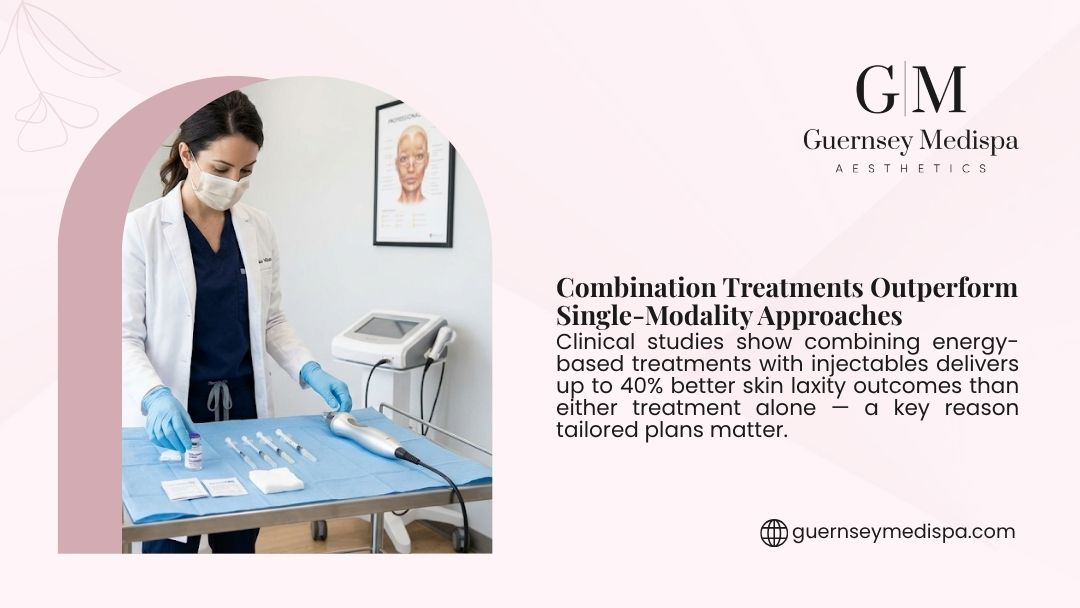
RF microneedling combines two mechanisms in a single treatment. Fine needles create controlled micro-injuries in the dermis while simultaneously delivering radiofrequency energy at a targeted depth.
This prompts collagen and elastin remodelling from within the skin rather than from the surface alone.
Why It May Help Early Jowling
For the lower face specifically, the combination of skin tightening and fat remodelling makes RF microneedling a practical option for people with early jowls and some skin texture concerns.
A prospective clinical study on lower face and jawline rejuvenation using RF microneedling found that 81% of patients were satisfied with the outcome, with an average 30% reduction in fine lines and wrinkles and a 20% improvement in neck silhouette.
Broader clinical data shows approximately 85% of patients rate their results as “much improved” or “very much improved” on aesthetic improvement scales.
Understanding what RF microneedling does differently than regular microneedling is helpful if you are trying to decide which version of the treatment better matches your skin concern.
What Results Can Be Expected?
- Visible skin tightening in the jawline and lower cheeks
- Improvement in skin texture and pore appearance
- Results continue developing for 3 to 6 months post-treatment
- A course of 2 to 3 sessions spaced 4 to 12 weeks apart is common
Dermal Fillers for Facial Support and Jawline Definition
How Volume Loss Contributes to Jowls
Jowls are not always the result of skin stretching alone. As the facial fat pads deflate with age and bone structure subtly changes, the skin in the lower face loses its scaffolding.
The result is a softer, less defined jawline, even when skin quality itself remains relatively intact.
How Fillers Can Improve Facial Contours
Strategic placement of hyaluronic acid filler along the jawline and chin can restore structural support and create a cleaner lower face contour.
A 2024 prospective study using the JOLT technique for jowl correction with HA fillers found the jawline rating scale improved significantly from 2.75 at baseline to 1.53 at 90 days, with both patients and independent investigators rating the outcome as “very much improved.”
A separate anatomically guided technique reported a 98% patient satisfaction rate with no major adverse events.
In 2024, over 6.26 million dermal filler procedures were performed in the United States alone, maintaining their position as the second most popular minimally invasive cosmetic treatment available.
Benefits and Limitations
| Aspect | What to Know |
| Results | Immediate, with continued improvement over 2 to 4 weeks |
| Downtime | Mild swelling or bruising, typically 3 to 7 days |
| Duration | 12 to 18 months depending on product and placement |
| Best for | Volume loss, jawline definition, early to moderate jowling |
| Limitations | Does not lift significantly lax or heavy tissue |
Thread Lifts for Immediate Lifting Effects
How Thread Lifts Work
Dissolvable sutures are inserted under the skin and positioned to physically reposition soft tissue.
The threads also stimulate collagen around the insertion sites as they gradually dissolve, which contributes to longer-term skin quality improvements beyond the mechanical lift itself.
Suitable Candidates
Thread lifts work best for people with mild to moderate jowling who want a visible improvement without surgery.
A large multicenter study of over 111,000 thread lift procedures performed between 2020 and 2024 found that procedure volumes increased year on year, with more than 60% of patients combining thread lifts with other treatments such as fillers or toxins.
Realistic Expectations
Clinical evidence shows 75% of patients demonstrated improvement at six months, declining to 55% at one year when assessed by blinded physicians. Hybrid thread techniques using multiple suture types can extend results to 18 to 24 months.
Thread lifts are not a surgical alternative for significant laxity, but they are a meaningful option for patients with mild to moderate sagging who want quicker visible results.
Collagen-Stimulating Injectable Treatments
How Biostimulators Differ From Fillers
Biostimulators such as poly-L-lactic acid (PLLA) do not add immediate volume the way hyaluronic acid fillers do. Instead, they trigger the body’s own collagen production response.
The result is a gradual improvement in skin quality, firmness, and structure that builds over several months. If you are deciding between a hydrating injectable and a structural one, our guide on how skin boosters compare with fillers sets out which suits each concern. If you are comparing options that work with your own biology, read about polynucleotides as a regenerative alternative before booking a consultation.
Gradual Results and Longevity
A 2025 multicenter RCT involving 331 subjects found that PLLA achieved a 90.57% improvement in midfacial volume at 12 months, outperforming hyaluronic acid fillers.
In a separate 2024 RCT of 260 participants, 67.6% improvement in wrinkle severity was recorded at 52 weeks, with over 90% patient satisfaction.
Patients also reported high satisfaction for improvements in skin firmness (91% or greater) and natural-looking results (85% or greater). Results can last up to 24 to 36 months. If you are also weighing regenerative skin boosters against classic fillers, our guide to choosing between polynucleotides and HA explains which suits different concerns.
Who May Be a Good Candidate
- Adults with early to moderate jowling and skin quality concerns
- Patients who prefer a gradual, natural improvement over immediate visible change
- Those who want longer-lasting results and are comfortable with a multi-session approach
Laser Skin Rejuvenation Treatments for Mild Sagging
How Laser Treatments Support Skin Renewal
Laser treatments work by stimulating collagen production and improving surface skin quality.
Ablative lasers remove the outer skin layers to reveal healthier tissue underneath, while non-ablative and fractional options work at deeper levels with less surface disruption.
Best Candidates for Laser-Based Approaches
Lasers are particularly suited to adults with mild surface laxity, skin texture irregularities, pigmentation, or uneven tone alongside early jowling. For those whose concerns centre on persistent flushing rather than laxity, IPL treatment for rosacea and facial redness is a separate route worth understanding before choosing a lift option.
When used as part of a combination approach with energy-based or injectable treatments, they can meaningfully improve overall skin quality.
If concerns include sun-related skin changes alongside laxity, IPL photo rejuvenation for sun damage may be worth exploring as a complementary option.
Limitations for More Advanced Jowls
According to Johns Hopkins Medicine, laser treatments do not directly lift or reposition sagging skin.
They support skin renewal and surface quality, which makes them a useful complement but not a standalone treatment for moderate or significant jowls.
Recovery from ablative laser can take four to six weeks, whereas non-ablative options carry far less downtime.
What Causes Sagging Jowls?
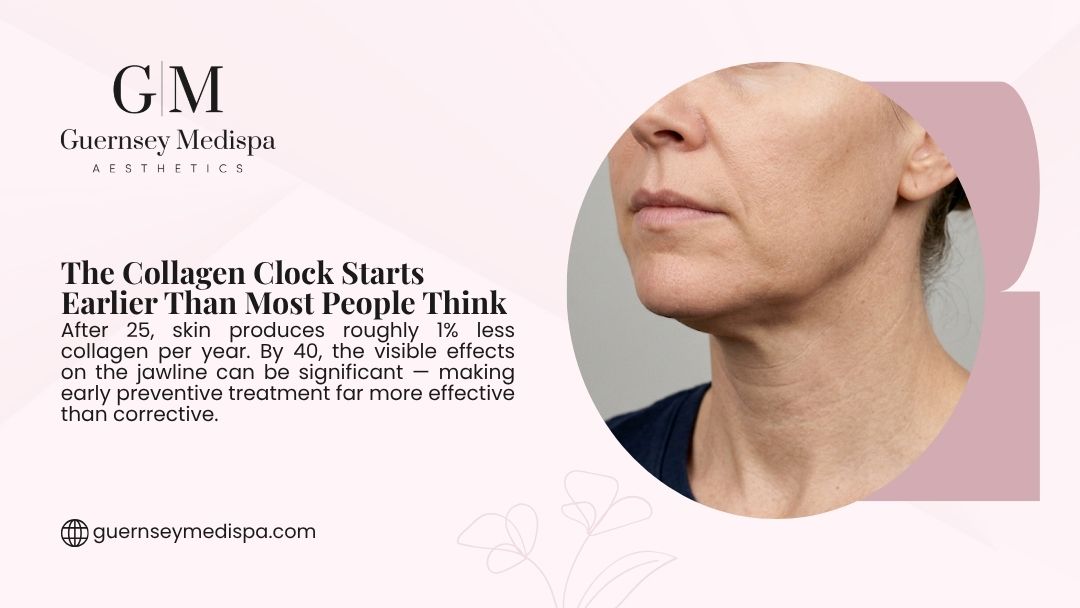
Jowls form when the skin and soft tissue along the lower face gradually lose their structural support.
Collagen levels typically begin declining around age 35 to 40, and as fat pads shift downward and skin elasticity weakens, the jawline softens and the lower face starts to look heavier than it once did.
For many people, this change happens before they feel ready for surgery, which is exactly why demand for non-surgical treatments has grown so significantly. A personalised Anti-Aging Program can combine skin tightening, collagen stimulation, and rejuvenation treatments to address multiple causes of sagging jowls.
The global non-surgical cosmetic procedures market reached $31.74 billion in 2026, and that growth is largely driven by adults who want visible improvement without the commitment of a surgical procedure.
Frequently Asked Questions About Non-Surgical Face Lift Options for Sagging Jowls
What is the best non-surgical treatment for sagging jowls?
There is no single best answer because the right treatment depends on what is causing the jowls. Volume loss responds well to fillers or biostimulators.
Skin laxity benefits more from ultrasound, RF, or RF microneedling. A thorough consultation is the only reliable starting point.
Can non-surgical treatments actually lift jowls, or do they only tighten skin?
Non-surgical treatments can improve firmness, definition, and early laxity. Thread lifts and filler techniques provide some degree of lift. However, no non-surgical treatment replicates the tissue repositioning that a surgical facelift achieves.
The more advanced the sagging, the less likely non-surgical options will deliver significant lifting alone.
How much sagging is still suitable for non-surgical treatment?
Mild to moderate jowling typically responds well to non-surgical approaches. Significant or severe sagging, where there is excess skin and deep tissue descent, is generally better addressed surgically.
75% of women aged 40 and over report concerns about sagging skin, yet a large proportion remain suitable candidates for non-surgical management.
How long do non-surgical jowl treatments last?
Duration varies by treatment. Dermal fillers typically last 12 to 18 months. RF and ultrasound results can persist for 12 to 24 months. Biostimulators such as PLLA offer the longest duration at 24 to 36 months.
Maintenance sessions help sustain results across all categories. For muscle-relaxing injections, our breakdown of Botox longevity and its influencing factors sets out what to expect between appointments. Upper-face lines follow a different pattern, and our comparison of plasma pen vs Botox for forehead lines explains how duration differs between skin-resurfacing and muscle-relaxing approaches. For those considering RF microneedling, how long microneedling takes to show results gives a realistic view of what the treatment timeline looks like.

Finding the Right Treatment for Sagging Jowls
The best non-surgical face lift options for sagging jowls are rarely one-dimensional. Jowls develop from a combination of skin laxity, volume loss, and structural changes, so the most effective treatment plans address more than one factor at a time.
At Guernsey Medi Spa, we have delivered over 10,000 treatments with more than 15 years of experience in medical aesthetics. Every client receives a personalised assessment, along with tailored aftercare recommendations that may include products such as Almond Oxygenetix foundation to help protect and support the skin following selected treatments.
If you are noticing jawline softening, lower face heaviness, or early jowls, book a consultation today and receive a treatment plan built entirely around your skin.
